Sunday, February 19, 2017
Flitting and Waiting
The elder toddler by 3 months is like his mom now: matter-of-fact and highly organized, he puts one thing away before he moves on to something else, after playing with that one thing for some time. He likes to line up his toys in lines or recently in circles, enjoying the design of it, the orderliness and heaven forbid anything interfere with his planned order. Like his uncle, when he focuses on something, he is intently focused on it. Also like his uncle, he's socially wary and watchful but very kind-hearted and sweet-natured. He appreciates and welcomes help when he wants to do something that isn't quite working out.
The other one is like her dad in that she's very artsy and musical. She's also like her aunt and her dad both as young children, swirling about from one thing to another and back and forth, leaving a wake in her trail of blocks and crayons and puzzle pieces she likes to dump but not put together and she's always moving on to the next thing. Now and then something will catch and hold her attention and heaven forbid you take her away from it. Like her aunt as a child, she loves people and talks to everyone, whether or not they're willing to talk. She will give them "that look" if they ignore her. Also like her aunt, she is very much I Can Do It Myself (which she calls "me-self" currently).
It's interesting to watch them develop their innate personalities regardless of what goes on around them. The world can do as it wishes, and their parents can guide them, but they are who they are and they know inside this is perfectly okay.
I see myself in both little ones. I want things as they are supposed to be, in order and organized, and I don't appreciate anyone else interfering with the way I have things, but this often doesn't come out externally since I also jump from interest to interest and disorder naturally follows, which drives me nuts, but it doesn't change, no matter how I try.
Some things just are as they are and it's okay.
The photo above is my newest project, or newest part of a new project, a series of yellow flower based paintings on 8 x 10 canvas. I'm far better at drawing than at painting because I've done far more of it, but I've had the urge to paint lately, in between my urge to work on clay, so although I have one yellow flower painting in progress already, partly painted and waiting, I had to sketch this one because I saw the idea for it and wanted it in progress. Eventually, I'll add paint. For now, it waits because this weekend, I'm back to the rewrite of the novel that was "done" other than edits which is now getting a makeover with a changed, expanded ending. I also have the next Thoughts & Sketches journal underway that I work on when I feel like it.
In retrospect, that novel in progress needed to wait a bit. Ideas from day to day life and inspirations have infiltrated the story and by now I realize it wouldn't have been right if I'd pushed to just get it done. You have to listen to your instincts. It wasn't ready, so it had to sit and wait while I flitted around with other things.
Sometimes you have to Do It and get it done and other times you need to sit back and wait. Some call it procrastination. I call it all in due time.
Those two little toddlers are exactly right. They are perfect just as they are and I hope they can hold onto that belief regardless of what the world tries to tell them. Grandma will be standing by ready to argue back with the world.
Tuesday, April 19, 2016
Autotelic Arts and Professional Envy
I love Van Gogh. I have ever since the first painting of his I saw jumped out at me and said, "Hey, look at this!" At least they say that to me. The video talks about how "late" in life he decided to paint as a career/living/obsession. He was 27. That didn't sound terribly "late" in life to me, but then people do tend to live longer these days, so relatively, maybe it was.
Then I got to thinking: I was 30 when I began to take my off-and-on writing hobby to an obsessive (aka professional-minded) level. I do feel that was starting rather late, in as much as there were so many years I could have been working hard on it instead of playing at it so I'd be farther along by now. I see young women putting time and effort into their writing career at the age I was very busy with little kids. I don't regret that at all, but I sure could have been writing instead of doing cross stitch while they napped or were in school.
I do have a little bit of envy for those pursuing their writing so seriously so young, even though I realize my choices were mine and maybe what I needed to do at that time. Or I just didn't believe it would go anywhere, so I didn't bother until I had to write. For myself. Because I had to. There does come that point. If I'd found it earlier...
Anyway, my writing is autotelic. I write what I need/want to write, despite the way it doesn't fit today's market and that I may never be one of "those" names due to the fact that it doesn't fit. I even tried a couple of years ago to start a new direction under a different name along with my "need to write" stories, and they slid right back in to what I need to write, not what fits or what will profit financially.
I believe art should be autotelic.
I do.
Still, there's that other post I've been thinking about writing. That one where I talk about professional envy. My own, that is.
It's very hard to work so seriously for so long, as Van Gogh did, for little to no compensation while your writing friends and acquaintances are showing off their successes and big sales numbers and best seller statuses. It's hard. It's envy, of course, and we've all learned that envy is a bad thing.
I think it's not. I think envy is a wonderful challenge. Jealousy, now that's different. Jealous people tend to take it out on those of whom they're jealous, or they manage to hold it in and let it eat at themselves. There is nothing helpful about jealousy that I can see.
Envy, though, says yes, it bothers me that I'm working so hard and not getting the glory you're getting. It says, whether true or not, that my work is as good or better and deserves as much recognition. Maybe it does. But in all honesty, maybe it doesn't. Maybe they made the choice to write for the market and they're pulling the effects of that. Okay. So what? That was their choice, and it was a good choice. They deserve the good effects of their choices.
Does that mean it should be your choice, also, instead of whatever choice you made? Or maybe you didn't see and haven't heard how much struggle they already went through and you're making a sad assumption. Maybe your work isn't as good as you think. Maybe it's outstanding and you're just not hitting the right audience. Maybe...
There are too many maybes to list them all. The thing is: so what? Their path is their path. Your path is yours. If you aren't happy with that path, then use that envy productively. Acknowledge it. Realize you aren't a bad person simply because you're envious.
If you're envious, it means you care about your work. Yes? Caring is good.
If you're envious, it means you want to do better in some way. That's always good. Just figure out how and work toward that.
There is space for non-autotelic art. Obviously there is. Sometimes you can get lucky and what's autotelic is also commercial ("in"/easily salable) at the time you're working. That's a wonderful thing. If it's not and enough of your writing goal is income, then do both if you're able.
Van Gogh died a pauper having sold only one painting while still alive, due to his brother's efforts.
Personally, I find that extreme and I believe there has to be a better balance for autotelic artists. I know there is. I've seen very passionate, talented artists doing fairly well. That makes me envious at times, yes, but it also inspires me. When one person does it, it shows it can be done.
Take notes. Consider the how.
(If you have a loved one who will work hard to promote you when you can't afford to pay them, consider yourself lucky, too, and be sure to return their help as much as possible, which, from what I read, Vincent didn't do at all. Maybe that was part of his downfall. Maybe he needed to learn to give a bit more to others instead of always taking and expecting success before he felt able to give back. Sometimes that doesn't happen and being a leech off someone who cares about you never works out well.)
Professional envy can be very constructive. It can also be devastating. Which one it becomes depends on how you handle it.
Autotelic art can be amazingly creative and beautiful and long-lasting. It can also be soul shattering. Which one it becomes depends on how you deal with the natural results.
Never expect anything from your art. Hope. Work hard. Push yourself (but not beyond your limits). Keep going (or don't if it's too much to handle).
Be honest with yourself. Why are you doing it? For the sake of the art or for sales? Whichever it is, don't expect people to bend to your whims and support it just because you think it's worthy.
Yes, maybe it is. To you. To some. And that's great. But never expect.
Just create and trust.
In the meantime, do something that will support you. Cutting your art hours by having a "real" job or by giving to others while they help support you can be frustrating, yes, but it can also build your passion and create inspiration. It also creates respect.
I love Van Gogh's work. I do. But much of me thinks he would have been better off, physically and financially, if he'd taken up a side job that pulled him away from "it's all and only about my art and the heck with anyone and anything else" attitude. Because it's not. His beloved brother would likely have lived a longer and healthier life, as well, since he wouldn't have had the constant drain of a grown man constantly asking for more money for food and paint on top of supporting his own family.
Yes, at times I have trouble congratulating other writers on their successes. I admit it. That's part of being honest with myself. I still, though, am happy for them, because I know what kind of work and commitment it takes. I know I lack marketing skills and interest. I know I could be doing much more to promote my work. I'm quite sure I could spend more time working at the craft part of my books. There are always things that could be improved. My failures are my own, not theirs, and I remember that. It doesn't make it easier. It does make it acceptable.
Sometimes that's good enough, at least for the time being.
And if it becomes unacceptable, well, I need to improve what I'm doing in some way. Or, as the line I most remember from my grandpa, a very wise man, says,
If you don't want to do "what he's doing" then your results will be different. When it comes to art, they will very likely be different anyway, because art is subjective and what's beautiful to one is ugly or blasé to others, but that's okay, too. You can't make people think the way you do or appreciate what you appreciate. You have to work with what is, even while striving for improvement, both your own, and your society's.
Be envious. And then put it to good use.
Be autotelic or don't. And realize the results will vary.
Monday, June 07, 2010
What’s in the artist’s name?
I have a dearly departed friend, also my first editor, who wrote a book called “The Real Shakespeare” several years ago. She joined a large debate of those who believe the man named William Shakespeare did not actually write all of those gorgeous plays. I give all respect to Marilyn Savage Gray for her views and incredible research for the book. Maybe she’s right. And maybe those who say it was actually a woman who wrote them, using his name since women were not accepted as writers back then are right. How do we know?
More importantly, how much does it matter?
Today on art.com’s Facebook page, they bring up a painting called “Girl With A Broom” from 1640, signed by Rembrandt. We all know who Rembrandt is, whether or not we could pick out his work. His name is up there with the masters of art, and well-deserved. They ask, though, was that painting done by Rembrandt? Or was it done by one of his students: Carel Fabritius?
I daresay most of us haven’t heard of Fabritius. I hadn’t. And yet, if you look at his self-portrait posted here (from http://en.wikipedia.org/wiki/Carel_Fabritius ), you see quality work and a departure from Rembrandt in that his background is lighter and the painting in general is less dark.
Did you know that many of the masters had students helping to create their art? They were able to complete more work that way, and in doing so, earn more money. I have personal issues against the practice. Once another’s hands are in a work of art, it is no longer as truly pure. How do you know which comes from the named artist and which from students (or editors, for that matter).
Maybe that’s all besides the point. Maybe it’s what’s left behind that matters and not who produced it. I do feel that way about Shakespeare’s works, although if someone else did do the writing, I would like to know that and give that artist credit. (I don’t believe much in ghostwriting, either, although many writers make a good living with the practice and seem fine with not having the recognition.)
Personally, I feel Shakespeare wrote his own work, possibly with editing help or even with “student” assistance such as the fine art masters had. One of the big objections that critics use against him writing his own is that he was “common” and not school educated. Ah well, so was Abraham Lincoln. That point doesn’t hold an ounce of water with me.
I put much more value in self-education, anyway. School education follows a model, attempting to mold all kids to learn the same way and the same things. It’s like Fabritius studying under Rembrandt’s style so much that we can’t tell for sure which work is from which artist. Rembrandt’s name is the better known because he created his own style after learning bits and pieces from others and changing and manipulating the lessons into something different. That’s self-education at its best.
So does the artist’s name matter? Apparently it does if the artist stands out from the crowd instead of following the beaten path.
Shakespeare was not only a principal actor at the time, but he also was in large part an owner of the Globe theater. In this way, he could be considered one of the leaders of self-publishing. Did he write his own work? I would say yes, at least enough of it to establish his name. If others did no more than follow his style to add to the body of work, does it matter if we know their names? I’m not so sure. At that point, it’s the work itself that matters.
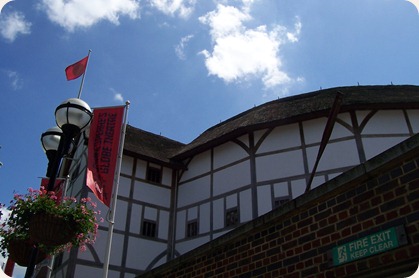
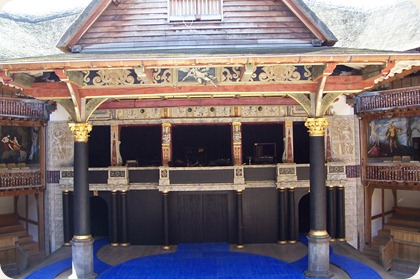
I had the opportunity to go into the Globe Theater a couple of years ago when we visited England. Of course, it’s not THE Globe, since the original burned to the ground, but still, it was a memorable event and I could almost feel myself sitting amongst the crowd watching an original Shakespeare performance on its premiere showing. It’s a powerful thing to surround yourself with largeness and originality and the work of the masters, and take pieces of that away with you to create your own masterpieces.
--
Find Rembrandt’s work on Art.com
Find Fabritius’s work on Art.com
Find Marilyn Savage Gray’s books Here or at BN.com.
Wednesday, March 10, 2010
Artistic Eye: in photos
Art is a way of seeing.
That’s far from a new thought, but yesterday I posted a few photos of a local park in the blog I set up for my county to show the area in all its glory. I posted the link in my Facebook and received a comment about my “artistic eye.” That’s what art is all about: seeing things in a different viewpoint, looking more deeply and at different angles to find details. I’m not sure if it can be taught fully, but there are techniques anyone can use to see things more artistically.
I’m not a good teacher. I never have been. I found this back when trying to help my kids with their homework. Understanding and teaching are different. However, I’m always willing to share what I’ve learned and thought I’d try today, using other photos from the park that are more artsy than descriptive, if that makes sense.
I have a thing for docks. There’s something romantic about an old wooden structure reaching out into the water, a path that leads seemingly nowhere, unless you have an alternate mode of transportation. I don’t see only the dock here. I see the possibility of a small boat coming to its open end, ready for passengers. I see a couple walking out hand-in-hand to the edge and sitting together enjoying the water (or slushy snow in this case) and serenity of nature, wordless, since quiet is a powerful means of communication. I see footsteps in the snow beside it that were there before the weather warmed and made treading out on the pond on foot impossible. I see the shelters in the background amidst the trees that hold the possibility of get-togethers and laughter. I wonder who made the footprints. I wonder if the water is seen as a barrier between the dock and the shelters or a connection. I see the changing season: grass beginning to show on the land while snow and ice still control the water. I see possibility of metaphor.
Angle matters. If I had centered my son in the photo, I wouldn’t see the little pavilion in the background and I wouldn’t get the path of water leading to it. I wouldn’t have the edge of grass that echoes the melting of the ice that echoes the short sleeves. I wouldn’t get the same angle of his head echoing the curve of the pond. There’s always more to a photo than the main subject. Background matters.
Catch the sun in the right place and it will assist your eye and transform your scene. Also, try looking up instead of always out. It’s amazing the beauty you can find just by raising your chin.
Catch the reflections.
And the tracks left by someone else.
If you’ll return (and you can know I’ve left a new post by subscribing to your right), you’ll soon find more artistic eye entries: in fine art, in writing, in design, and maybe in social issues.
By the way, all photos online are copyright protected by their creators. If you would like to use my photos, please contact me and let me know where and for what. I don’t mind sharing with permission and credit. I have the better, larger versions if there is a good purpose for the larger versions.
Sunday, August 02, 2009
Author Interview: Joanna Waugh
Blind Fortune
Joanna Waugh
Regency Historical Romance
322 pages
ISBN:9781419959028
buy link: Cerridwen Press
Read My Review on CRR
Joanna Waugh: Thanks so much for inviting me in today, Loraine. And thanks for the great review of BLIND FORTUNE.
The first question I always ask is if you have a response to my review. Is there anything you'd like to highlight or argue?
JW: I only want to say how pleased I am you liked the book. The feedback from readers and reviewers has been heartwarming. I’m overwhelmed by the positive response BLIND FORTUNE has received.
It’s all well deserved! Debut novels tend to be a huge learning curve and I think you’re starting ahead of the game. Speaking of starts, as I mentioned in the review, the amount of research you did for the novel is impressive. Are you a researcher by nature?
JW: I think so. I discovered I had a knack for it in the late 1980s when I researched my husband’s family tree. I was able to ferret out information about his great grandfather others had spent a decade trying to track down. Later, this talent stood me in good stead when I became involved politically. I think I would have made an excellent investigative reporter!
Yes, I’m guessing you would, also. Family tree research is an admirable skill, and tedious. I’ll bypass the political question that’s skimming my brain since I try not to do that here ;-) and move on.
The Regency Period covers England in the late 18th to mid-19th centuries. How long have you been interested in this era? Did you grow up reading Regencies? If not, what was your favorite reading material?
JW: My mother belonged to Book of the Month Club and I grew up on authors like Mary Stewart and Daphne du Maurier. I had a voracious reading appetite. By junior high, I was sneaking into the grown up section of the public library. I couldn’t borrow the books so I’d sit there all day, every Saturday, reading them.
Mom loved history and historical romance. She still does. I remember once, when I was in grade school, the Kroger store had a special promotion of young adult biographies. Every week Mom bought me a new one – George Washington, Stephen Decatur, Abraham Lincoln, Louisa May Alcott. I loved American history! But I got hooked on the English Regency when I discovered Georgette Heyer as an adult.
How wonderful of your Mom to feed that interest! I started reading historicals because Mom did, as well, particularly with John Jakes and Irving Stone. I may have to look up Georgette Heyer.
Joanne, as well as history, I sensed a love of art in general from within "Blind Fortune" and had to go peruse your website to fulfill my curiosity. Can I say I'm not surprised you studied art? Now I have to say I also began college heading toward commercial art and changed paths, as well as also being pulled out of college for marriage. This is leading to two questions:
Was your art love a planned theme for this novel or did it appear as you wrote?
JW: How wonderful we have so much in common, Loraine!
Most blind people possess an affinity for music so it seemed logical that Lady Fortuna would play the pianoforte by ear. And because music speaks so deeply to the soul, I knew it had to be important to my emotionally wounded hero, Charles Lowden, as well.
Music, art and classical literature were an integral part of 19th century life. Some of the greatest painters of the 18th and 19th centuries came out of England—Joshua Reynolds, John Constable, JMW Turner. William Hogarth and Thomas Rowlandson were wildly popular with their satires of English life.
Remember, this was before photography. The only way to memorialize a scene or person was in a painting or illustration.
That’s something I didn’t know about the blind. Interesting. And I’m applauding your point about music and healing. Speaking personally about the soul, did your own experiences play a role in Lady Fortuna's feelings and fears about married life or about life for women in general?
JW: I wrote BLIND FORTUNE based on personal experiences with my husband’s loss of sight from diabetes. Most human communication is nonverbal so he often misunderstood conversations. It struck me as an excellent premise around which to craft a romance.
I tried to imagine what life would have been like for a blind woman of good birth during the Regency. But the story really came together when I read Mary Wollstonecraft’s Maria or The Wrongs of Woman published in 1798.
Women of the Georgian and Regency periods were owned body and soul by the men in their lives. In BLIND FORTUNE, Lady Fortuna fears a husband might lock her away once he gets his hands on her dowry. It’s a legitimate concern, given how little time alone courting couples were allowed in order to get to know one another. An unscrupulous man could hide behind exemplary behavior until the marriage vows were exchanged.
In Mary Wollstonecraft’s world, a woman’s identity was subsumed with that of her husband when she wed. People literally believed the biblical doctrine “two become as one flesh.” Divorce was almost unheard of and required Parliamentary approval. Once married, a woman was trapped for life.
Ah, I read part of “The Wrongs of Woman” as part of a women’s literature class some time ago. Powerful writing. It’s amazing how far women have come and we need to pay homage to women such as Wollstonecraft for helping that come about. I’m glad you mentioned her.
As romance writers, we know there is a tendency for the general public to look down on romance novels. And yet, they are the best selling genre consistently. I know from your website that women's issues are important to you and you've done a fair amount of research in that vein. Do you think there's a connection between a general degrading of romance and 'chick flicks' that relates to women's fight for equal recognition?
JW: You are right that women’s issue are close to my heart. In the early 1980s, when my husband lost his sight, I needed to find a better job to support my family. As a union employee with the local gas and electric company, I was able to leave my clerical position and become the first female journeyman electric meterman.
As a writer, particularly an American one, I can’t help but bring this experience to my stories. Unfortunately, it makes them less true historically. I mentioned before that women of the 19th century were at the mercy of the men in their lives. Most of them were content with this position. But that attitude doesn’t resonate with 21st century women. More of them are entering the military; more are opting to have children outside of marriage. It’s difficult for them to identify with the past as it truly was so an author sometimes must bend the truth to fit modern sensibilities.
I think you did a nice job showing both, balancing the historical aspect with the needs of modern fiction. I also have to think many women were not content with that slavery but unsure how to go about changing it. It was widespread battered women/victim syndrome where only the strongest dared fight it.
To lighten things up again, what is your favorite color? Do you wear this color a lot?
JW: Blue has always been my favorite. But over the last few years, I’ve gravitated toward purple and lavender. It goes well with my gray hair!
Are you an outdoorsy type or do you prefer being within closed windows?
JW: Despite working outdoors for almost thirty years, I’m not the woodsy type. I don’t camp or hunt. My idea of roughing it is the Holiday Inn! But I do adore walks along Lake Michigan and boating.
There’s another similarity. I agree! So do you have any "different" hobby you'd like to share with us? Do you collect anything outrageous or scuba dive or so on?
JW: I collect Russian nesting dolls. Lovely little works of folk art. I have one whose smallest doll is roughly the size of a sesame seed. And it’s painted. With a magnifying glass you can make out its little smiling face.
Oh, those dolls are precious! I have a set we picked up in Germany but the smallest is nowhere near that small.
Speaking of painting and art, if you could claim one famous work of art as your own, which one would it be and why?
JW: Only one? What an impossible task! Van Gogh’s Starry Night. Salvador Dali’s Invention of the Monsters with its flaming giraffe and his Persistence of Memory with its melting clocks. I absolutely adore Seurat’s Sunday Afternoon on the Island of La Grande Jatte. It’s on display at the Art Institute of Chicago. When my son was in grade school, I took him to see the painting. I dragged him up close before he had a chance to assimilate what the picture was about. Shoving him within inches of the canvas, I asked, “What do you see?” “Dots.” He said. Then I dragged him back and watched the wonder dawn on his face as the picture gradually coalesced. “The original dot matrix image,” I told him.
Joanna! La Grande Jatte is one of my all-time favorite works of art! I saw it at the Art Institute back in my college days after I’d studied it in art history class and it’s amazing. I had to use it in one of my books, I was so struck by the piece. Van Gogh is another fave. I love your picks.
Back to writing, tell us what you're doing now. Any projects in the works?
Right now I’m working on a Regency paranormal set on the border of Scotland in 1816. Home from the war, my hero accidentally releases the 6th century spirit of a pagan king from a well in which it has been trapped for twelve-hundred years. The spirit follows him home and begins wreaking havoc. The hero and heroine must overcome their differences and work together to banish it. In the process, they rediscover the love they lost two years before.
Sounds like another great read. I’ll be watching for it.
Joanna, thank you for taking the time to be with us. I wish you all the best with future books. I also encourage any art and music loving readers out there to pick up Blind Fortune. Is there anything you would like to add? Be sure to leave us your links to find you!
Check out my resources for Regency readers and writers at http://www.joannawaugh.com
(Click on “Joanna’s Books” to read excerpts from BLIND FORTUNE)
Be sure to “friend” me on Myspace and Facebook
And don’t forget my blog about British customs and holidays at http://www.joannawaugh.blogspot.com/
-
Wednesday, April 01, 2009
When a Thing becomes a Character
What happens when part of a setting is so completely integrated into a story that it magically transforms from a Thing into a Character?
Take this rock wall from a photo I snapped somewhere along one of our road trips. It could simply be part of the setting -- background detail to help ground the reality of where our characters are and what they see, maybe even showing how they feel about it that defines them somewhat. This is the typical use of description, even when it's describing such a gorgeous scene as this wall.
On the other hand, it could become such an important part of the story that the story wouldn't be the same without it. It could be a catalyst for a character to change. Maybe he passes it every day and ponders it for miles afterwards, so much so that it becomes a part of him. Maybe he becomes as rigid and strong as that rock wall while allowing enough subtle growth to let himself flourish like the hardy vegetation hanging on to its side.
I used this device in Finishing Touches, my novel about a young artist fighting against being an artist because she marries one and feels she can't compete with him. Throughout the story, she often refers to the huge window in their loft that allows her to look out at the world while staying safely closed within. To my delight, one of my readers picked up on the characterization of the window and how it helped define Jenna herself. It reflects her struggle to look out or to stay in, her urging to explore her art and use it, or to give in to her insecurity of not being good enough. This theme reaches beyond art and into other areas of her life.
Her artist spouse, who she loses just before the story begins, paints a scene of them wrapped in only a blanket looking out at the river below. The window, here, becomes a metaphor of the exposure Jenna feels because of his professional career, because she becomes known as his wife and attracts another young artist who is a fan of his work. Still, it keeps a boundary. She may be exposed but she's beyond anyone's bounds to be able to reach. Or so she believes.
The window becomes a character. The story would hardly be the same story without it.
[originally posted at Lindsay's Romantics 26 March 09: http://lindsaysromantics.blogspot.com]
~~~~~~~~~~~~~~~
Finishing Touches is available as a Trade Paperback and as an Ebook. Find its website for more information at LKHunsaker.com/FT/main.htm
Thursday, February 14, 2008
Romance Chat!
http://www.voy.com/198742/
Sunday, December 16, 2007
Behind the Novel: Different Drummer
~~ ~~ ~~
A rather unfashionable plaque that looks as though it may have been plucked from a garage sale adorns a place in my den where others are unlikely to take notice. To be honest, it's not much to see, with its thin wood frame containing nothing but a lacquered fake-texture background on which is printed a few words:
"If a man does not keep pace with his companions, perhaps it is because he hears a different drummer. Let him step to the music he hears, however measured or far away. ~ Thoreau"
A few words.
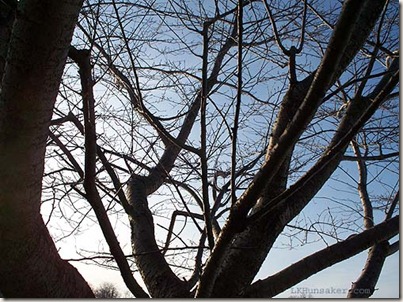
Let's face it, being an artistic type isn't exactly a well-understood trait. We see things differently, and others see us differently. This is something I, as an artistic type, have struggled with for many years. All adolescents have the difficult journey of trying to define themselves, but add to this the hundreds of stories rushing through your brain that you know are a real part of yourself, or the way you look at a tree and see not only the tree, but the structure, lines, grace, blending of colors and shadows that cause you to stare until those around you begin snickering. We different drummers get used to the snickering as we grow and become more comfortable with ourselves. We may not get used to dealing with the attitudes from those who don't understand.
These few words echo through my mind and soul whenever the attitudes crash around me. They have reverberated often enough and deeply enough by this time to have become part of me, even though they are not my words. This is what I hope to achieve with my writing: to say something that makes enough difference to readers that it reverberates through their souls.
The plaque, simple and unbecoming, has an honored place in my den. Others have no need to realize why it hangs where I can see it when I look away from the monitor, struggling with words and wondering at the logic of following the artistic life. It reminds me to keep marching to my own beat and remember the value of a few words.
LK Hunsaker
~~ ~~ ~~
When I started showing the cover of Rehearsal: A Different Drummer to a few people for their opinions, one of them asked why it showed guitars when the title was about a drummer. With the quote above, I suppose it's easy enough to know why I did, but readers of course wouldn't have the advantage of reading the quote and my thoughts about it first. It is about drummers ... about different drummers who don't all happen to play the drums. It's about the arts and artists: the oddities, the sacrifices, the misunderstandings, the need to follow a personal path despite outer opinion -- and it's about the way all of those things affect and change us and those around us.
The cover is more appropriate than I can explain right now, with three more of the series to come, but there is a point to what looks like a title that doesn't fit the image. It does. It's a bit of foreshadowing.
As I'm working on ideas for the cover of the second of the series, the quote I'll be taking the title from will also be in my thoughts, although that may not be apparent, either.
"If the highest aim of a captain were to preserve his ship,
he would keep it in port forever."
St. Thomas Aquinas
Wednesday, November 28, 2007
Mel and Maks: as great as M&Ms

"Every ballet, whether or not successful artistically or with the public, has given me something important."
Mikhail Baryshnikov
Okay, Mel and Maks should've won last night. Really, they should have. Their technique was better. Mel was solidly good throughout the season, while as I loved Helio at the beginning, he kind of lost interest for me during mid season with a lack of versatility. He can move, granted. During certain routines he was wonderful. At other times, he was rather boring, but then Julianne is always incredible to watch and her routines are great. Maksim's routines are always a treat to watch.
That's what happens, though, when you open things to popular vote. You get personal opinion about personalities/backgrounds/careers interfering with the actual business of what is supposed to be judged. It happens with everything. I've seen writing contests judged by popular vote whose outcomes, predictably, show popularity, not writing quality. It happens in the business world of fiction. It happens in politics. Popularity sells better than quality.
So, I was completely unsurprised when Helio won. He's charming. He's a race car driver. He even admitted it was based largely on popularity.
In my mind, Mel was the true winner and I applaud her efforts and so enjoyed watching her and Maks together; not only for technical quality and versatility, but also for their fun chemistry that showed tons of respect for each other.
You don't have to have a trophy in hand to be a winner. Your efforts and the search for quality and pushing yourself make you a winner.
On that vein, CONGRATS to all who are pushing through with Nanowrimo for the next three days. Word count isn't important, either. The trying and pushing and learning makes you winners.
Now, how about having an author on Dancing With the Stars????
Tuesday, March 13, 2007
A Walk In The Garden
"I try to live what I consider a poetic existence. That means I take responsibility for the air I breathe and the space I take up. I try to be immediate, to be totally present for all my work."Maya Angelou
As any gardener knows, a simple walk in the garden is never simple. The beauty others see upon viewing the results of her work cannot compare to the thoughts of the gardener while walking along her flowers. She sees not only the hours of work already put in, but also the hours yet to come and the details she is not quite happy with that she wonders how to improve.
In a way, her garden is more beautiful to her than to anyone viewing it in passing. In another way, it can never be quite as beautiful as others see.
Other artists understand her. Painters visit an art gallery and see the work lying behind each piece. They listen to compliments of their own work and burke the thoughts of knowing what could have been done better. Dancers feel the pulling of muscles and strains and fatigue while watching other dancers while the audience sees only the grace and beauty.
Writing is the same. We hold our books in our hands and read reviews, thrilled to see when a reader 'gets' what we are trying to say behind the words, humbled at the request for a signature, and thankful for each sale. At the same time, we don't see only a pretty (or scary or mysterious) cover and many pages full of a story. We see hours upon end of writing and rewriting, editing and pondering, deleting and redoing; and we especially relive the questions that plague us through the whole process. Are we accomplishing the beauty that is in our minds well enough? Will we affect readers enough to make some difference in their worlds?
Our walks through our books are filled with these questions as well as with thoughts of what we want to do better the next time, what weeds we would like to pluck off the printed page to replace with a rose or sunflower or carnation.
In the meantime, we focus on marketing, on finding readers who may enjoy our stories and our characters.
Much of my winter has been spent focusing on marketing. My website now offers a press kit for bookstores, a special offer for reading groups, and a brand new newsletter to offer information on happenings with my writing and in the indie arts. I'm quite glad to announce a new arts feature, as well: An Interview With A Musician. You'll find the first, a chat with Johnny Roxx,renowned guitarist, posted on the indie arts page.
I would also like to publicly say thank you to the two fans who are running Myspace pages for my three main characters from Rehearsal. Liz and Jan, I can't thank you enough for your support and assistance.
You'll find the first three chapters of A Different Drummer in the characters' blogs, one in each blog, beginning here: http://www.myspace.com/duncan_rehearsal
The prologue can be found on my site: http://www.lkhunsaker.com/DifferentDrummer/excerpt.htm
Spring has arrived, and with it, I am not only back to working in my flower garden, but also obsessive about furthering the second book of Rehearsal, entitled The Highest Aim. Does anyone know from which quote the title comes or the author of it?
Also with spring comes spring cleaning. As I'll be changing residences soon, I have been clearing out things I don't want to have to unpack and store in the new house. The fewer things to move the better, in most cases. So I am also going to start offering a "moving sale" on the copies of A Different Drummer I have in stock. I hope to publish The Highest Aim this fall and would like to make room to stock that one next.
Watch either Myspace (http://www.myspace.com/lkhunsaker) or my newsletter (http://www.lkhunsaker.com/newsletter) for details.
Wishing you all a poetic existence,
LK Hunsaker
Sunday, February 11, 2007
Abridged Arts

"People had longer attention spans.... The works have been abridged to make it easy, more accessible for the TV generation."
Mikhail Baryshnikov
I clicked on a link tonight that asked how many were planning to watch the Grammy Awards. Welcoming the chance to say, "No, thank you, I have better things to do," I was pleasantly surprised that the majority of voters agreed.
I love music. I used to watch all of the music award shows years ago in order to get a chance to see some of my favorite singers and musicians. And then came the MTV/VH1/CMT generation where we could watch them anytime we decided. I did watch videos for a while. Rarely able to attend concerts, I used them as a substitute, having them on as often as my radio, or nearly. Now they are all over the internet. Is it any surprise award shows have lost their charm considering the availability of picking and choosing who we want to watch instead of whomever the powers to be decide to invite?
As a curiosity, I did click the link that told me who was nomimated for the top three awards. After wondering if I had the right list, I could see why so few are interested in watching. Has music declined that far? There was not one act I care to listen to on the radio, much less waste 3 hours of precious time seeing who comes out "ahead."
I posted this in my daily journal and another writer replied it's the same in the writing world. "Poets" who so apparently haven't studied the artistry and technique of poetry are publishing their works. Essays are nothing but rants without real thought other than fleeting anger. Journalists who have forgotten or never bothered to learn the concept of integrity of the written word abound in print and online. Where is the artistry in the arts?
I am an advocate of the indie arts. I'm an indie artist. The internet has become an incredible tool for those outside main genre publishing, in both music and writing. Readers and listeners now have many more choices than one of the niches that big companies pick up and put out there. Artists now have a free venue with which to promote themselves. It is a wonderful thing.
On the other hand, it has also given some a false sense of "art." The number of works being pushed out into public view without being ready is alarming. I receive many, many friend requests from indie bands on Myspace. I don't mind getting them, and I always go give them a listen. Many I add because they do have talent and I like their sound. Most now, I refuse, either because it isn't my style or because I flat-out can't fathom why someone told them they were ready to publish their music.
The same applies to writing. I can go to a writer's site or read their emails on a writing list and know they can't possibly be someone I want to read. Yet, they are promoting books they've published, likely without professional editing. Some writers can get away without professional editing, as long as they have someone else reading their work to find things a writer cannot see in her own work. Some are attuned to grammar and only need an extra eye and suggestions about the plot or characters. Some have incredible stories and a nice way with words and only need grammar assistance. Some have neither, and yet, because they "wrote a book," they decide it needs to be published.
Poetry books are being published without the "poet" realizing it takes more than rhyme and a certain number of lines to be actual poetry. There's an artistry missing that cannot be faked.
There is artistry missing in much of the arts.
In this TV generation, we are full of the glitz and glamour of things without bothering with quality. Our actors don't have to know how to act. They only have to know how to put on a show and flash their smiles. Our politicians don't have to be well-trained in how to command or lead. They have to be charming and look good on our screens. Our singers don't have to know about the intricacies of music. They have to be actors who can make those clueless about music vote for them. Our writers don't have to train themselves on the techniques of plot, characterization, climax, endings, sentence structure, or poetic use of words. They have to know how to create book trailers to catch attention with "book videos."
Of course there are exceptions. There are many indies doing glorious jobs and I love that they have the means to let their work be known. I only wish the artistry would come before the promotion instead of our arts becoming so abridged.