 I’ve had or seen a few discussions lately about what should and shouldn’t be taught in high schools. Now, I’m not a teacher, but I have done quite a fair bit of research into educational issues and I’ve had a fair bit of education beyond high school, strongly in the literature, art, and psychology fields. Education is of major importance. We all know this as a fact. What we can’t seem to agree on is what it should consist of and how it should come about.
One conversation was with a young friend who felt that art and music should be taught in schools but should not be graded. One of her points was that it brought her grade point down because she’s not good at it. I understand that reasoning. It’s not something she plans to do in her life, anyway, so why grade such things? Heck, I felt that way about science. Math, I understood why it was necessary. We all use at least the basics and theories. Biology? Chemistry? Botany? No, I still see no use in my life for having to have been graded on any of that. Yes, it’s everywhere. Yes, it affects us all. But learning what little I learned of it has not helped my work.
Or did it? The thing is: the seemingly simple event of learning something new makes more difference than most of us understand. Our brains are like any other muscle; the more we use them, the stronger they get, and the more varied things we learn, the more supple they become.
So, this brings me back to the article I read on a book site that really got me fuming, not only because of the vulgarity and condescending tone in it, but because her whole thesis was that since she hated and didn’t understand Hemingway, or other classics, all classic lit should be thrown out of high school lit classes. Most high school sophomores, she said, have “no frame of reference to tap into the heady though subtle emotions that course through Hemingway’s novels.”
Wait. No frame of reference? But isn’t that what fiction is supposed to give us? A wider frame of reference? As far as I know, teens don’t have a frame of reference to tap into the emotions of vampires who live forever if they suck blood or magicians with powers that make them the most important person in the wizard world, either. Does that mean since, as a young teen I lived in the middle of cornfields in an average working class family far away from war, had never had an illicit affair, and had never experienced impotency or traveled to Spain, I couldn’t begin to understand Hemingway’s characters’ emotions? I did, though. I understood them fine through my limited frame of reference.
Since the article’s author loves In Cold Blood and Fear and Loathing in Las Vegas better than Hemingway, yes, we should throw out all of the classics and have sophomores read about druggies destroying their lives but being oh, so cute about it or the intricate details of a savage murder. Nightmares, anyone? I would have.
Yes, high school students should be made to read certain books for the same reason they should have to learn science basics. It’s a learning experience. It opens horizons.
That said, I don’t think any student should be forced to read novels about rape, incest, murder, or war if they feel strongly against it. Do parents realize what their kids are being made to read? You should if you don’t. Read reviews about the books you see coming home from school, or try reading it yourself. I was appalled at one of the books my son brought home and said he tried to read but just couldn’t. It was “in” at the moment. I guess the teacher thought she was being trendy. No, I wouldn’t read that graphic intensely violent thing, either, and I told him not to bother (probably the first and only time I ever told him NOT to do his homework).
Wouldn’t it be easier to have a selection of different genres so they can choose which classics to read and which modern fiction to read? Give them choices to an extent, but don’t throw out classic fiction that gives them frames of reference they will not achieve in any other way. If it’s a struggle for them to read, that’s a good thing. It is. Making things too easy on kids is doing them no favors.
And yes, if they have to be graded on science and math, they should also be graded on art and music. For some of us, those art and music grades pulled up our GPAs after struggling through those other classes. Would it really be fair to take that from us? (By the way, learning art and music basics help you learn everything else better. Scientific fact.) Good teachers will recognize a true attempt to learn and be somewhat lenient on the grading scale for artsy people struggling with math and for math people struggling with arts. I had a science teacher who did it for me and I’m forever grateful, because really, I did try, and that was the important thing for this non-scientist.
I loved “having” to read classics in school and it was as important for this writer-in-training to do so as it is for budding scientists to learn chemistry. We all have different things we struggle with and through. The struggle is as important as the things that come easy.
So, how about I trade you my Tolstoy for your… well, I’ll read most any genre that won’t give me nightmares, at least on occasion. And I won’t try to get Twilight pulled out of kids’ hands if you don’t try to get Hemingway away from them. Capote and Thompson I might take issue with. They can wait on that till they’re choosing completely on their own. Or at least give them different options within the same genre.
Half the point of teaching literature is learning the literature itself, to include the techniques, the metaphors and similes, flow, plot, conflict and conflict resolution, and how the author slants words and phrases to express her personal opinion, all of which will overflow into their lives if it’s taught well. The other half, and maybe the much bigger “half,” is to teach them to love to read, to realize how much they can learn from books, and how much bigger their horizons can be. We can’t do that by making them read only books they don’t enjoy.
Include the classics, but give them other genres, and choices, as well. They should be learning how to teach themselves what they want to know, not how to get by the easy way, and not that we should throw out and dismiss what doesn’t interest us. Make them quest for more knowledge and you’ve done the biggest part of giving them the tools for success.

Monday, January 20, 2014
Classic Literature and Education issues


Thursday, January 16, 2014
My Word for the Year
 I found Project Underblog by chance yesterday and I’m a fan of a group of writers or bloggers all posting about the same theme at the same time and linking together. I also agree with Ms. Yother about resolutions for the new year. So, along with always wanting a good topic for my blog, I found this inspirational and had to jump in.
I haven’t done resolutions for some time. I’ve been doing goals, more or less, but have wavered on setting new goals specifically for the year because the schedule for my goals doesn’t go by the calendar. Not exactly. At least not January to December. The idea of choosing one word as your theme for the year instead of a resolution was very appealing. As I thought about it, a few possible words came to mind, but the one that stuck the hardest:
FOCUS
Focus is a much bigger word to me than it appears. It’s not one of my strong points. I have a plethora of interests and even within each field of interest, I have a plethora of things I want to do. I start new things often. I mean OFTEN. I start far too much to possibly keep up with it all.
That doesn’t work well when you have a mountainous goal/task that needs a LOT of attention and time.
So this year, my theme is FOCUS. Specifically, I have to cut out some miscellaneous time wasters, those things I’ve come up with that might be a good idea… Yeah, yeah. Good ideas are a dime a dozen (just like cute guys, so the song says). Implementation, and I mean full implementation, is more rare. And far more important.
My focus this year has to be on those things most important this year. I’m talking about writing specifically. I’ve produced well. I believe each book surpasses the last in quality. What I’ve truly lacked is focus on the things I truly Want to do with my work, other than the work itself.
My marketing stinks. I know it does. Maybe because I’m too scattered and have too many ideas. I’ve considered which supposed marketing tools (you know, those sites authors just HAVE to join) are not productive enough for the time they take, and mainly, they’re ones I don’t enjoy a lot. Those need to drop in status to hit or miss as I can get to them. I don’t have to be everywhere; really I don’t.
My important and most enjoyable tools are
1) My blogs. I like to blog. I have lots of thoughts that can’t be well confined to 160 characters. I have several blogs. All of them have been sorely neglected. Much of my focus this year will be improving and increasing blog activity.
2) Elucidations. I believe in my indie arts project and need to spend more time on that.
3) A project I barely started to develop last year called Write The Light In. With my psychology degree and my natural instinct to want to help others and to bring out the good side of things, this thought of combining that with my love of words is dear to my heart. It deserves full attention.
So this year I focus on the above, along with my actual writing, of course. Some social network places will close. Others will be “as I can get to it.”
FOCUS: My theme word for 2014.
Anyone else in? Click HERE to join in, but link submissions close in 3 days, so jump fast!
Tuesday, January 07, 2014
Recipe stuff and my own creations. Seriously.
Okay, if my family reads this, they will laugh. Why? I’ve spent a lot of wasted breath talking about how I hate to cook and I get sick of cooking… and on and on. Really, I don’t. In general.
However, I have been on a health kick over the past few years and since too many recipes call for stuff I’m trying to avoid, such as the very evil refined white sugar, I’ve been adapting recipes to fit my own needs. To me, they taste better than the original, but then I have adjusted my sugar intake way down from where it was. I’m a recovering sugar addict, by the way. Don’t you just hate how recovering addicts KNOW so much about what they’re recovering from? Ah well.
So of course that means writing them on … gasp … recipe cards. For this new grandma who recently had to get stronger reading glasses (like how I threw the grandma thing in there?), little bitty, read “regular sized” recipe cards are just annoying to no end, especially when you have to squeeze in the ingredients so it’s hardly legible.
Being the creative soul I am, I got creative in finding a better way to store and read my cards. Easy enough. First and foremost, I bought 5 x 8 recipe cards. See how much more space they provide?

Have to love that space! Of course they don’t fit in my regular (mostly unused) card box. I’ve been storing them on the fridge with a little suction clip where I can put them over my counter as I use them so they don’t get dirty. Yes well, then they’re hard to read. So I grabbed a 6 x 9 binder with clear pockets, pulled up Publisher to create a snazzy printout to slip in the front and side and voila!

Of course you can also just grab colored pencils or crayons or markers or whatever you have on hand. The only tricky part was changing my paper punch to 6 x 9 size to punch the holes to fit.

Easy! I still need to get alphabetized dividers for it, but now I just set it on the counter beside me, flipped to the recipe I want, and cook away (willingly or not). It even fits nicely with hubby’s cook books. (Only one of these is mine, other than my binder.)

I’ll start sharing some of my own remade healthier recipes soon. Yeah, don’t laugh. Cooking is less horrible when you’re being creative. 
Friday, January 03, 2014
From sea to shining sea…or something like that

My husband and I spent most of December out in sunny Arizona. It was my first trip to the much-warmer-than-PA state and we reveled in being able to sit out on the patio in short sleeves and sunglasses and get some vitamin D back into our sun-starved systems.
Okay, a bit of an exaggeration. PA does have sunshine in the winter. Most of the winter, it’s too cold to be out in it very long, but we do have it and it streams through my windows where I’m running my space heater to simulate summer and keep my toes from fussing. Right now we have a good 8 inches of snow or there about.
We didn’t go southwest for the weather. We went to welcome our first grandbaby into the world.
There’s something about being a grandparent that nothing else can touch. I can’t say it’s better than being a mom. It isn’t. I don’t have the 2 am feedings and such, so there is that, and I do like my uninterrupted sleep. But we had to leave baby back in AZ with his parents. That was hard. I did it to my mom, too. There’s something about those soldiers that will make you leave your beloved family and move across the country, or out of the country. Back when I did it, we didn’t have texting and cell phone pictures and social media and internet live video. Back when I had my first baby overseas, phone calls were horribly expensive and therefore very limited.
We live in easier times. At least in some ways.
Anyway, it’s been a very long time since I stopped writing for nearly a whole month. To be honest, it’s been at least ten years. Did I need the break? Maybe. Not sure about that. I did need the family time, though, the new baby time. And I stole plenty of it. Baby grandson slept in my arm or on my shoulder fairly often. Nothing better than that, or even equal to that, other than your own doing the same. Yes, we believe in holding babies a lot. A LOT. It makes them feel secure. At that age, if they can’t see or hear you, they don’t know you still exist. What a very scary concept to be so little and so helpless and to think you might be all on your own!
And when that baby comes to visit Grandma and Grandpa several months down the road, he will remember us and the complete and total infatuated love we gave him from his first days.
So on the writing note: I’m working on Rehearsal 5 while #4 waits for comments from my beta readers and editors. I still plan to put the second Ella M. Kaye book out in February, although I gave up a month of work on it and will have to hustle. I have paintings done for a hardcover version of Stanley, and thoughts for a second children’s book. I’m fully back to work. And maybe I didn’t need the break, but it didn’t hurt anything, either.
If you’re interested in my Arizona photos (scenery – won’t publicly post my grandbaby although he’s just as cute as heck!), I have the best of them on Pinterest HERE.
And if you want to see what the next Ella M. Kaye book will be about, you can visit its story board HERE.
 I will be getting a newsletter out and updating my site. Soon, I think. Right now, I’m intensely checking back in with my characters. Guess I did miss them.
Monday, November 11, 2013
Military in the Arts, oh how it leans…

It’s Veteran’s Day in the U.S., a day to honor those who sacrifice for us. Many will ‘honor’ them by jumping on big retail sales. Restaurants are offering discounts and free ‘value’ meals. We’re all on the ‘support the military’ bandwagon again in recent years. Okay, not all. There is still plenty of hostility toward service members, most of which is never broadcast, but it is there. I guess that’s their right – free speech and all.
Except I’m not so sure our speech is still all that free.
Soldiers are restricted as to how much they can say. Military families have learned to be cautious. So who is telling us most of what most of us ‘know’ about the military? Well, artists, actually. Journalists. Hollywood. Authors. Songwriters.
Anyone else see the big problem with that?
Most of them haven’t been there. A big (and big mouth) actor said just the other day that his work was as hard as a soldier’s work. I actually laughed. It is funny when people make assumptions about something with which they don’t know. That’s still nothing compared to the big (and big mouth) author who loves to claim people join the service only if they aren’t smart enough or educated enough to do anything better.
Sad. Truly. They don’t get it. 
So far the only books I’ve read that center around the military and are realistic are Hemingway and Vonnegut. They were there. They know. All of these war movies? Come on. It’s Hollywood, and Hollywood loves to make 4-star generals look like morons and ‘brainless’ troops look like sheep who just follow orders without thinking. Of course they show them this way. They’re about 95% anti-military leftists. Just a fact. It shows. It showed glaringly when they all jumped on that non-American rapper who sang about killing American soldiers and their families and had him appear on big TV shows and even a nut commercial. Yeah, so he apologized. Big deal. What’s done is done. Too many of us didn’t even know what he’d done, but they did. And yet we supported him with our money in the form of watching the shows and buying the advertisers’ products.
It’s also a fact that the arts in general lean heavily liberal. That’s their right, but we should know and acknowledge that fact because the bias is overwhelming, especially when we don’t realize it’s there.
It is there. On both sides. Including in journalism that is supposed to try to avoid it. Most of them used to. No more. It glares through every headline and every sentence.
Yes, by all means, thank Veterans today, but if you truly care about our military, active and retired, consider them on a daily basis, pay attention to bias, research political candidates, and support those who support us. Veterans support us far more than any politician and we need to remember that.
And yes, I’m an artist and author, but I’m also an Army(Ret) spouse who knows the truth from the inside.
 Love. Honor.
Trust.
Sacrifice.
Moondrops & Thistles
LK Hunsaker
Read the interview about the novel.
Sunday, October 13, 2013
Old fiction and Current events
 I read a lot and I read widely, not only in fiction but I also read non-fiction books now and then and I read more online articles and interviews and comments from everyday people than I could possibly count. Writers are supposed to be observers. They’re supposed to capture current events and share the stories behind them, not only to help expand the world in their contemporary time period, but to leave knowledge of the events and its lessons to the future, as well. Those who don’t read back in time are missing huge cues as to how people, times, and politics change, and how they don’t.
I’m a political animal. Those on my personal FB page know that already. I mainly keep it off my FB author page and I’ve kept it out of my blog in general. I’m not sure that’s a good approach. I write about political and social issues. I write about real people, families, parenting, small towns, big cities, mainly America since it’s what I know best but also visits into other countries, which I have done in practice as well as in writing. All of that is swept inside of politics, intentionally or not. We are all touched by it, no matter how disinterested we say we are.
When it was strongly recommended that I read Taylor Caldwell’s A Prologue To Love, I was only part interested. But when part of the recommendation was that my writing reminded the reader of Caldwell’s fiction, I gave in. It sounded like an old fashioned romance, which is fine, but not the first genre I choose. (Sorry, I’m not an Austen fan.) I’m more than halfway through now, and I can say it is not a romance in any form of the current definition. It’s fully mainstream in the vein of John Irving, but mainstream fiction, often called serious fiction, written by women is almost always termed something else, often women’s fiction. Sexism at its finest. A Prologue To Love IS mainstream fiction.
Published in 1961, it follows a woman through her life span in the years when America was in its industrial age and trouble was just starting to brew in Europe, in part due to Karl Marx and company, when in America the middle class was evolving that provided an option other than upper and lower classes. It’s fully a class struggle novel.
Last night while reading, I ran into a section I thought all of us now should read, so I’m sharing it. This should fall under the “fair use” rule, so don’t report me for copyright violation. I research that, also. I’m big on research
~~ ~~ ~~
[William is an English lord related to Timothy, a wealthy American trying to move into politics.]
”What?” cried William incredulously. “What class struggle? You have no classes in America. Any man with a little intelligence and industry and inventiveness can make money in America and keep it and add to it and make himself a fortune, for you have no personal income rates as we have. Such a man can rise to any position in America. You haven’t any classes!”
”We’ll make them,” said Timothy, and smiled more pleasantly.
”Why, for heaven’s sake?”
”For political purposes. We’ll also pass an income tax law, which will prevent, eventually, any man from accumulating new wealth and will set to protect those who have inherited wealth and also to protect them from the Vandals.”
”What Vandals?”
”The middle class, which is invading all parts of our national life now as it is invading your British life. With its vulgarity and suety virtues and morality and bad taste. We’ll use the working class to destroy the middle class in America; we’ll give the working class such hatred and such lusts that the middle class will be so taxed to death to support the working class’s greed that they’ll go out of existence. Liberty, equality, fraternity! Every man as alike as every other man, if we have to chop off the heads that stand up above the crowd!” He laughed and thought that William’s face, looking down at his, was utterly uncomprehending and just a little stupid.
”Then,” said Timothy, “we who have the great old inherited fortunes will also have power. And we’ll invent our own aristocracy. America’s a republic, now. But so was Rome, for the first four hundred years. We’ll have an American ‘democratic empire’ eventually, ruled by those born to rule, with only the contented and obedient masses under them and no challenging middle class.”
”You’ll never be able to accomplish that in America,” said William. “You’ll never be able to make the people class-conscious, not when they know that a class society means the end of freedom for them.”
”But they’ll never know,” said Timothy. “Just as your own working class, which can become middle class with enough hard work and intelligence, will never know.”
~~ ~~ ~~
”The purpose of a writer is to keep civilization from destroying itself.” Albert Camus
More suggested reading about fiction and class struggle: The American Dream and the Crab Bucket on Writing.com
Tuesday, August 13, 2013
Confession: I’m a Super Hero Junkie
 We watched Thor last night, and I mean the first one since I’m generally late on watching movies. Now I’m ready to see the next.
Yes, I’m a Super Hero movie junkie. I admit it.
I’ve read theories that women like super heroes because they denote personal protection and we women like to be protected, and that they can make men feel inadequate because they can’t live up to Superman’s abilities. I think that’s all hogwash. I’m a realist enough to know super heroes are fantasies, and I darn well understand the difference between fantasy and reality. I never actually expect Spiderman to throw his web around someone who is being a jerk and save the day, or for Aquaman to send a rescue dolphin if I’m silly enough to get in over my head in the ocean.
I could be wrong that some women like them for that reason. And I could be wrong that it makes men feel inadequate, although really, the men I know are also able to separate reality from fantasy and aren’t so silly they’d let a movie hero make them think they aren’t good enough because they can’t stop a speeding bullet or jump over a skyscraper. Now, honestly… why would anyone assume men would be threatened by cartoon characters?
One of the earliest lines in Thor was: “A good king never looks for war, but … he is always prepared for it.” (Pardon my memory if the quote isn’t exactly exact.)
I enjoy the themes in most super hero movies. They portray how a common man can step up and do very mighty things when his heart is in the right place and he is willing to put himself aside to think of others first. (Of course it applies to women, as well. It’s easier to use one or the other.) Yes, Thor was another cliché “boy learns to be less arrogant and more human to achieve a common good for all” theme, but you know what? That theme doesn’t get old to me. Because it’s true. Because we need to hear it over and over. We need to know that we can all be a super hero if we will do the same, if we will cast our selfish, petty wants aside and put others first and help them achieve. If we stop our quest for power and control (which are both fleeting and overvalued) and give them up for a greater cause.
We do have real life super heroes. Maybe they can’t pick up a heavy magic hammer and make everything right with one stroke, but they can put themselves in harm’s way to protect others. And they do. Every day people do so. They might not do it with strength. Sometimes they do it with gentleness, or with intelligence, or with no more than determination. But they do it. And I thank them for it.
Maybe the fantasy side of it appeals to me, as well. I can’t say I’d mind if someone with more strength, power, and intelligence would come FIX things for us when we can’t seem to do it. But then, that would take away the need for us to become super heroes ourselves. And maybe that’s the point.

Friday, June 28, 2013
7 Reasons writing an Indie book makes you even more a badass
 This is a friendly nod to Brian Klems of Writer’s Digest for his 7 Reasons Writing a Book Makes You a Badass article. No offense or competition between traditional writers and indie writers intended. It’s a joke, son!
~~ ~~ ~~
I’ve been a professional indie for ten years now (if you accept the commonly accepted definition of ‘professional’ as someone who has sold her work) and I’ve just released my 10th book, my 10th self-pubbed book, that is. I was indie long before indie was cool. I was calling myself an indie author before anyone knew what the heck that was or heard anyone else use the term. As far as I know, I created the darn term.
When I read Klems’ article title, I had to laugh. As someone who spends much of most days sitting behind my computer clicking away or reading back over previous work and making change after change after change, I’m well aware I come off as rather boring. Heck, I don’t talk much. I really don’t. Not vocally. Never mind the ridiculous amount of conversation going on in my head and the constant self correction when I don’t think something to myself quite right. Since others don’t see that, I come off as pretty boring and have been told as much. Shrug. I’m not bored with myself, so it’s all okay.
I have to agree with Klems. As a writer, I’m fairly badass. (Excuse the language, but he started it!) Go read his article first, then come back here, because it is a bit different for an indie.
1. Writing a book is hard
Amen. I’ve helped quite a few new writers along when they wanted to write a book but had no idea how to start. In the end, if they really want to write a book, and not just have a book with their name on it, they’ll figure it out as I did. Encouragement is nice, though, and I’m always willing to help with tips. When you’re writing your first book, there should be no difference between trad and indie; it should be for you, not for a market, for sales, for money, or for glory. For you. The rest comes later. Those of us who stick it out not only to The End but to beyond the end to a marketable product have guts. And tired fingers and hazy brains.
2. Editing is painful
Yes. It’s especially hard when you don’t have a trad pub editor helping you out, telling you where to cut and where to add, or a pro copywriter picking out your typos and grammar/ spelling errors. You better be able to do it yourself or get some good help. Beware self-made editors who ask for money in return for their help. Just like authors, editors are good, bad, and in-between. A lot of indies get stuck in this quagmire. Ask around. The best bet is to learn it yourself and then ask for extra help. They make grammar and writing books for that.
3. Knowing you can go back and re-publish is a blessing and a curse.
Yes, you can pull your own books and re-edit and re-publish, but be careful. It’s an easier process with ebooks, although if they sell, those copies are out there until deleted. Once you’re in print, that book is there. Once a retailer has it, they intend to hold it until their copies sell or they send them to a clearance distributor. (It’s only fair if they do.) It’s too easy to jump the gun and get your book out because you’re excited, and then cringe later down the road when you’re more experienced and see the errors of your ways. Any takers to ask how I know this?
4. Convincing readers your work is good when a bigwig somewhere hasn’t said so and isn’t backing you is scary.
Convincing yourself of that is even scarier. Unless you’re too arrogant for your own good, an indie never stops second-guessing her own work until she becomes the next Amanda Hocking. (Anyway I suppose she isn’t still second-guessing herself. Maybe she converted to a trad publisher so she could rest those doubts more easily.) It can be it tough to convince others your books are good enough to be worth their time and money when you only have yourself and your beloved family and friends saying it is.
5. Rejection. Yikes!
All writers get bad reviews. They happen. When you’re an indie and readers know it, you likely will also get “I found typos” comments in even good reviews. I read avidly. I’m not sure I’ve ever read a big pub book that did not have a couple of errors or more. Still, I’ve never seen that mentioned in reviews. I see it plenty in indie published reviews. Granted, far too many indies have far too many typos, [and *sigh* far too much bad writing, but then I’ve seen plenty of that in big pub books, as well] (see above about putting your books out too fast), but many have no more errors than the big pubs. Be aware you will more likely be slammed for it as an indie or even as a small press author. Being rejected by readers when you don’t have that “contract” saying you’re a good writer can be pretty darn hard to take. I’m sure it is when you’re under contract, also, but I wouldn’t know since I haven’t bothered to try to get one of those. (Except for my children’s book and that was more an experiment than anything. I do that. I like to experiment.)
6. Getting paid for your work… insert laugh machine here
Advance? To an indie, that’s what you pay to get your books out to the public. Of course ebooks can be done with no money expended. Print books are a horse of a different color. I have to sell, on average, 60 print books by hand (at signings or otherwise) to make up what I spend to get my prints out there and to have enough on hand at a price readers expect. When local retailers sell them for me, that number of books goes up since their commission comes out. It also goes up when you’re selling at arts fests that demand booth fees. Sixty books doesn’t sound like a lot, I suppose, but when you’re unknown, or virtually unknown, and when you write literary or mixed genres instead of commercial fiction, and when you tend to write long in a world of quick and easy, sixty is a lot of books. It is. Especially when it can take several months to a few years to write and edit that book until it’s ready to be out. Few of us fiction writers make even close to minimum wage.
 Only the truly brave put out that kind of money in hopes that not only will they make it back, but actually make a profit. And then, of course, you have to be brave enough to DO signings and to ask retailers to carry them. Most of us authors are introverted and many of us are rather shy. Try fighting social anxiety that’s at disorder level and sitting out under a tent at an art show or in a bookstore and convince people your work is worth their time and money. Oh, and realize while you’re doing so that you may not make enough profit that day to even cover your space fee. Super ninjas, we are. Never mind the next few days are recovery time from the stress of it.
7. Accomplishing a dream is awesome.
YES! The lack of profit, stress, and doubt aside, when you, as an indie author, who wrote it yourself, paid for it yourself, edited twenty times and then sent it to reliable people to help and then edited again yourself, after you did your cover art or found the right person to do it with your input, formatted your files yourself, uploaded your materials yourself, and did all of your own promo with bits of help from whatever family and friends are willing to spread around your promo posts…
Yes. It is awesome when those reviews come in praising your work, your story, your characters … and begging for the next.
I’m not sure there’s anything quite like it in the world.
We indie authors who spend years learning and writing and learning more and listening and researching and writing and editing and writing and doubting and rewriting and pouting and praying and typing until our fingers are near to falling off and our eyes have trouble focusing and our brains are hazy … we are badass, indeed.
Wednesday, June 12, 2013
FT Scenery: Lakeview Museum Peoria IL

Lakeview Museum of Arts and Science plays a strong role in The gallery, both in Finishing Touches and Final Strokes. Of course. It’s a story about artists set partly in Peoria IL in the Eighties, so Lakeview had to be included.
I see that the original Lakeview is no longer in use. Now it’s moved down to the river front and is the Peoria Riverfront Museum. That’s nice, I suppose. It looks like a great facility from what I see online. But it makes me a bit homesick for “those days” when things were as they were when I was still living in the area.
My sister took the above photo for me a few years ago to use in the book trailer for Finishing Touches.
Things do change, but the art scene is still thriving in Peoria. Know the old saying: “If it doesn’t play in Peoria…”? I love finding all of the art related pages on Facebook based in the area, such as The Studios on Sheridan. In fact, I have a recent interview from one of the resident artists that’s well worth the read (and a glimpse of her work).
Connie Andrews talks with Elucidations.us
The good thing about old memories for a writer is that they make for great story fodder. Much of that feel is forever encapsulated in The gallery and folded around a growing and struggling relationship and children and careers and unresolved issues.
Life is a gallery. You never know what you might find on any
 given aisle on any given day or how it might change your vision.
 If you’re on Goodreads, be sure to click the link to your right to enter my Giveaway for one of 2 ARCs of The gallery (yes, the g is small, on purpose). These are not for sale copies my editors used to help find typos and other errors. They will be signed.
Do you have a favorite local art museum? Give it a shout out in the comments!
Friday, June 07, 2013
Visual Artist: Connie Andrews [Repost]
Originally posted on my Elucidations blog, June 7, 2013
Visual Artist Interview: Connie Andrews
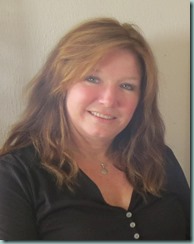
Connie Andrews creates beautiful oil and pastel paintings in her home studio in Central Illinois. I met Connie through my sister and have worked with her on the cover of a still-to-come therapy book. Along with being an incredible indie artist, she’s a lovely person. I’m honored to have her here at Elucidations.
LK: Hi Connie, let’s start with something fun. What is your favorite color and what is it that draws you, so to speak?
CA: My favorite color changes from time to time. I would have said dusty pink a few months ago. Why? It is a rich color, not too bright and garish yet not too child like pink either. It feels fancier to me somehow. But right now, I believe my favorite color would be a deep maroonish cherry red. It is still in the same color family as the dusty pink, just much deeper. I am also creating a wax sculpture now and the wax I am using is about the color I described.
LK: I always find it interesting how favorite colors change with age and life events. Speaking of changes, I have to ask, since you transitioned from auto upholstery to reporting to becoming a full time artist, how did you decide to take that leap away from a traditional paycheck to working for yourself?
CA: Let’s see, I owned my auto upholstery business and my reporter job was freelance, so actually I have been pretty much self employed all along. I have had some side jobs along the way to supplement my income as an artist, though. One day, while cleaning and organizing another self employed friend’s house, I had a revelation. I realized that I was helping her further her career by doing her mundane, time consuming tasks that almost anyone could do. While I was making a little money, I was not doing anything to help my career thrive. I decided right then and there that I needed to do something different with my time to make ends meet.
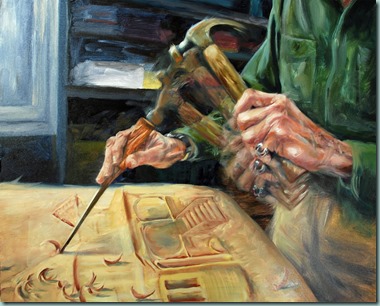
LK: What are the benefits and drawbacks of being a self-employed artist? Are you finding it worthwhile?
CA: The benefits to being a self employed artist are many. I am, for the most part, able to make my own schedule. If my muse decides to keep me up until 4am painting, then I am able to do that without having to worry about going through a 9-5 workday. Most of the time, I am available for my daughter. I am able to attend most of her school functions and be with her on her summer vacation, winter and spring breaks, days off of school and after school.
I get quite a few commissions and for the most part, people hire me to create a piece of art for someone as a gift. I love meeting new people and being able to be part of their special occasions, in a background sort of way.
Another huge benefit is that I am doing what I love, what I feel I was born to do. Paint, create, make feelings and ideas into 2 or 3 dimensional pieces of art that others can see or touch.
There are some drawbacks though. Lack of money can be one of them. Many people think that artists, being the caring people that they are, should give their work away at auctions or volunteer their skills to help others. I feel like my skills are something I have worked hard at perfecting for many years. I know many mechanics, carpenters, and other professionals who are very skilled and wouldn't dream of asking them to perform their services for free. Why do people ask professional artists on a regular basis to "donate" their work or time?
The economy has also hit many artists. Art is, to many, a luxury, and therefore, sales are usually minimal when times are tough.
One of the other drawbacks is that when doing commission pieces, which so far is what has kept me going, I am trying to bring someone else’s ideas into being which sometimes can be difficult. It is definitely a challenge to keep a balance between pleasing the customer and pleasing my own muse.
LK: I’m glad you mentioned the free expectations with art, since that’s also a big issue with writers. My thought is the same as yours. Artists work as hard as anyone at their craft. Why give it away free? I think it devalues what we do when we agree to that, but it can be tough to compete when so many do.
What reactions do you tend to get when someone asks what you do?
CA: Most people are pretty curious when they hear that I am a full time visual artist. When my only studio was based in my home, I would get the reaction that conveyed they didn’t think I was a professional. Being a resident artist at a studio outside my home seems to validate my reputation as a serious artist.
There are so many people who say, “Wow, I can’t even draw a straight line without a ruler” to which I usually think “me neither.” I will probably always use rulers.
LK: I think I’d like to see the reaction when you say you can’t! It’s funny, and a little sad, that working at home gives that connotation, isn’t it?
Recently, you were called upon to to do courtroom sketches. Can you tell us about that?
CA: An artist friend contacted me because she had heard that a TV station out of Springfield was looking for someone to be a sketch artist for the Christopher Harris trial. He was accused of killing 5 people in Beason, Illinois. It was a gruesome trial, but probably one of the most interesting jobs I have done yet. I absolutely loved the challenge of trying to capture the moment in the courtroom. I was there for the whole opening day with my pastels and paper. The day went by super fast. I was told by many people that they were surprised that the people I drew actually looked like the people in the courtroom. I thought that the whole idea was to capture a likeness and show what the scene inside the courtroom looked like. . I guess the reason it was such an exciting job was because it felt like there was a story unfolding before my eyes, and I was able to do one of the things I love to do the most in this world, draw and paint. I hope that I get hired to do more courtroom sketching. I can picture myself doing that on a regular basis.
LK: The painting on your website home page, My Father’s Hands, is so touching and evokes love and respect as well as telling a story. In fact, I love every piece in your Hands series. How did that come about?
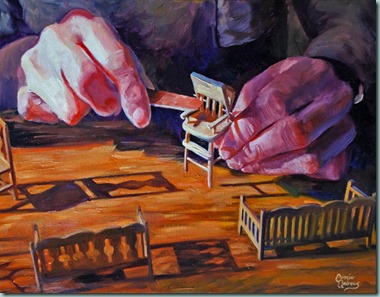
CA: Thank you. This is one of my favorite pieces. It holds a spot very dear in my heart. “My Father’s Hands” is the painting that started my hand series. My father, who retired from the Marines after 24 years, had very strong hands that had been through two wars. Yet he was able to use those same hands to do the delicate work required for these tiny dollhouse furniture pieces. I took pictures of him working with these pieces one summer in early June. I am glad I didn’t put off taking the photos. We had no idea that in about a years time he would be gone. I finished this piece just in time. I was able to show him the finished painting the day he died.
LK: Now I love it even more. That’s just wonderful. And I could go on and on about the military and gentle hands, but I won’t do there here. So, what are your favorite activities outside art?
CA: I absolutely love to sing. I was hired last year as the song leader at Union Church in Brimfield. They asked me to direct the choir at Christmas and I discovered that I love doing that as well.
LK: Very nice! I see you’ve done other book covers as well. Is that something you’d like to do more?
CA: Yes, I would like to do more book covers. I enjoy working with the writers/publishers to design a cover that will help to sell the book. It is also very satisfying to see my artwork in print.
LK: (Hoping my indie writer friends will give that a thought!) To bring more of the arts into this, do you listen to music as you paint? If so, what genre(s)?
CA: When I am by myself or won’t disturb anyone, I listen to music that I can sing to: Carrie Underwood, Daughtry, Bon Jovi, Faith Hill, Evanescence, Ray LaMontagne. If I am at my public studio, then I usually listen to music without words, like new age, instrumental or classical, so the temptation to sing at the top of my lungs is removed.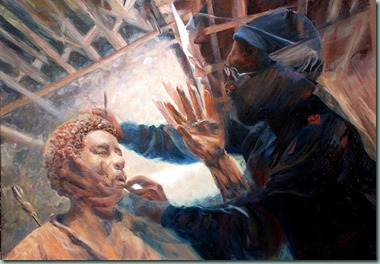
LK: I promised this would be short, so I’ll leave off with one last question. Are there other indie artists in any field you’d like to recommend?
CA: I have so many artist friends that I don’t want to leave any out. The building I have my studio in, Studios on Sheridan [in Peoria IL], has 12-15 artists. There is one woman by the name of Jill Goforth, that you, as a publisher, might be interested in since she creates art from books, using the pages and sometimes the spine to form things other than books.
There is also a women by the name of Jessica Ball, that has a business that seems to be the new trend. It’s called the Art Garage. People can show up for an hour or two and for a minimal fee, create a work of art or craft item with her supplies and guidance.
My studio partner, Gloris Young, has been searching for her visual voice for awhile and has possibly found it now in what she calls Pop Art Pets, funky, wildly colored, yet with realistically portrayed eyes.
There is Rebecca Draland-Doyle who is a very dear old friend of mine. Rebecca is a very dedicated artist who paints beautiful abstract pieces.
The list goes on and on, Billie Howd, Myra Branch, Steve Boyd, all accomplished visual artists.
If you are interested in musicians, Winston Dunbar writes music and plays in a few bands in the area. He has written some wonderful pieces that deserve more recognition.
LK: Connie, thanks so much for your time. I know you have a website at ConnieAndrews.com. Are there other links you’d like to leave?
CA: My Facebook page has lately been the place I keep most up to date. It is www.facebook.com/connie.andrews.560
One last thing, if you go to my website, there is a tab where you can sign up for my newsletter. Thank you Loraine
LK: My pleasure! Thanks again for talking with us!