Showing posts with label setting. Show all posts

Wednesday, June 24, 2009

Write What You Know - but what does that mean??


Illinois sunset over a school play yard -LK HunsakerIn the process of research today, I was trying to find a specific type of establishment in NYC that would work for my story. Now, I've been to NYC briefly and plan to go back, but I don't have the option to run spend several days there just for story research. It would be nice, but let's face reality: when you have kids at home and a job and such and you aren't the owner of Trump Tower with a private jet, there are restrictions on doing such things.


Internet research wasn't working well. I had the look in my head for the place I needed but try putting that in a search engine. It didn't work well. Finally, I went to Yahoo Answers and asked people who would know: NYC residents. I answer lots of questions there about books and writing and sometimes other subjects, so I figured getting a touch of return help would be nice.


The first answer I received started by saying:  "The first rule of writing ... write what you know."


Hm. Yes, that's helpful. Thanks so much. He did also mention a name of a place that might work but I was rather annoyed at the inference that I didn't know what I was doing that I didn't bother to check the place. [Luckily, the second answer was exactly what I was looking for! He'll get 10 points for being not rude and very helpful.]


Write what you know. So he meant I shouldn't put my character in New York City since I don't know it well? Or that I should use only the places in the city I do personally know? I am using one, a small music venue I enjoyed, if it matters. I know the feel of the city enough for the story. I know enough that it needs to be mainly set in Manhattan instead of another borough. My main character is heavily into the music industry. Let's see, if I can only write about the places I've been long enough to write with any real detail about them, the story would have to be set in Illinois, Texas, Massachusetts, Idaho, Georgia, Virginia, Pennsylvania, or Germany. None of those work real well for this character. Actually, none of them work at all. Yes, I set Rehearsal in MA but it worked for them. Or does that mean I can't write about a character in the music industry since I've never lived in any of the three big music industry spots in the US? Not to mention I've never been involved in the music industry itself. That's what research is for!


I'd like to tell this "top contributor" that writing what you know does not mean using only settings you know first hand. How limited would that make the literary world? What about historical fiction? Should no one write about time periods they didn't live in? How sad would it be to lose all those magnificent stories of the past?


Writing what you know is much deeper than that. It's writing the truths you've learned, the things you've seen, the thoughts you've had, and feelings you've felt. It's putting yourself IN your work and adding all those luscious true-to-life things that make books "real" instead of simply described. It doesn't mean write about your life as a memoir, which is okay also, but limiting. It means to take those things and turn them into fiction that echoes real life, that shares yourself and your experiences.


I write what I know. I have always studied people and families and relationships to watch what makes them work or not work. I make note of societal issues that stand out in my mind because maybe I have some valuable thoughts or ideas to share about them. I think things through. I know things. I see things happen and the effects of those happenings. I write about them. It's fiction, of course. I use them differently than they were in real life but the same -- the same concepts, the same issues, the same relationships. Or different relationships based on how things might have worked "if" only....


THAT is writing what you know. Is my story invalidated because I don't know which NYC restaurant has the look and location I need for a certain scene? I don't think so. The story is about love, loss, despair, hanging on, and letting go -- all things I do know first hand. If I was doing a documentary about NYC, then I would see his point. Otherwise, it's way off base. So is anyone else who tells a writer not to do a story in a place she's never been. That would throw out all sci fi and fantasy also, wouldn't it?


Write what you know INSIDE. Write what you FEEL. Write what matters to you, what you care about. Use details from your everyday life such as the moist breeze blowing against your cheek while standing on a beach, or the pounding, clacking noise of a nearby train station, or the way you feel when someone takes your hand and says it's going to be all right. Use that. Use your own reality. And put it anywhere in the world your character needs to be. The rest can be researched.

-

Thursday, June 04, 2009

Setting: The Watery Breath of a Story

Forth Bridges, Edinburgh-LK Hunsaker


"Water is the driving force of all nature."
Leonardo da Vinci


As water is the underlying basis for everything that lives, so setting is to every story that breathes.


Everything has to happen somewhere.


How do authors choose where their stories will happen? ~shrug~ I can't speak for others, as we all have our different reasons for sticking our characters wherever we stick them. Generally, it's love: the love of history or love of a certain place we visited or love of the unknown. With me, it tends to be a mix of all three.


By now, I've lived in six states and two countries and have traveled* a lot in between. [side note below] I've also taken an incredible cultural psychology class that further emphasized how we are affected by where we live. In the words of Anais Nin, "We don't see things as they are, we see things as we are." Setting is not only a place; it's character. It's part of who our characters are and novelists who ignore that are missing a huge chance to fill in the depths of the story.


Aphrodite, the ancient Greek goddess of love, was born of the sea.
from
pureinsideout.com


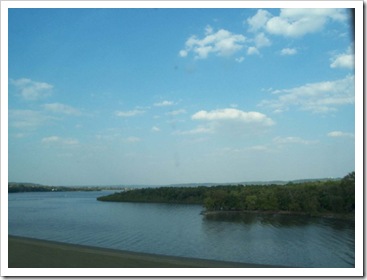
In my first-to-publish novel, Finishing Touches, Jenna is a small town Midwest girl raised nearly on the banks of the Illinois River. The river and trees surrounding it play a large part of her story, the trees being symbolic of her inner strength and deep roots and the river of her unbound soul that flows along where life takes her. There's also the little bridge mentioned that she crosses over, pausing to look down into the shallow creek. A bridge is a metaphor for crossing a boundary, for change, or for pulling the two different parts of her life together. In Illinois River-LK Hunsakeraddition to the structural "place" of the story, being from the Midwest helps make Jenna who she is. As each country has its unique qualities that help define its people, so do different sections of countries. As a small town girl raised in the Midwest myself, I fully understand Jenna and have a special love for the people who tend to be very earthy and natural, and rather conservative in actions and speech. Although the story is not autobiographical, other than the searching issue, the setting is. My first novel has the most involved setting; it's the most interwoven with the main character.


When I first started writing the Rehearsal series in notes and scattered scenes and character development, I was still in that small Illinois town, but my thoughts were always wandering elsewhere. I wanted to go out and see new things, explore new places. I couldn't do it often at that time, but my characters did. As a result, they are more worldly than Jenna, all transplanted from the beginning of the story which makes the setting less woven into their characters. Two are from Pennsylvania, three from New Hampshire, one from the UK. The story is set in Massachusetts, roughly thirty miles from Boston. However, it takes them out of their adopted town often, into other places, a metaphor for my own wanderlust.

Each of us "belongs" in a certain place. It may not be where we were raised. There may be some other place that calls out to us and helps us feel more settled once we're there. For me, that place was temporarily the Northeast and permanently the Mid-Atlantic. We lived in Massachusetts for some time and I adored the area, was sad to have to leave. At the same time, when we passed through Pennsylvania to go back to visit family in Illinois, it called to me, as it had during family vacations when I was young. And so, my two main characters from Rehearsal, Evan and Susie, had to be from Pennsylvania. I set them in the eastern part of the state so it Greenville, PA -LK Hunsaker would work better with the story, but put Evan's alma mater on the western edge. When putting him there, I never in the world expected to end up living so close to it.


My New Hampshire characters are supporting cast. I wanted them transplanted instead of being Massachusetts locals in order to give them that extra edge. Their personalities aren't MA personalities. It wouldn't have worked. I have yet to visit New Hampshire, so if anyone from the state wants to comment on whether they fit, I'd love to hear it! Of course, you'd have to read the book to find out. ;-)


"It is a curious sensation: the sort of pain that goes mercifully beyond our powers of feeling. When your heart is broken, your boats are burned: nothing matters any more. It is the end of happiness and the beginning of peace."
George Bernard Shaw


My next-to-come book, Off The Moon (fall 2009), has two main settings: New York City and Bennington, Vermont. The main character is heavily in the music industry and so it worked well to have him in the midst of one of the music centers of the nation. His family is in Vermont, which worked in different ways: it's a short enough drive from NYC so he's able to run back and forth easily, it's another place I've yet to visit (love of the unknown), and it has a wonderful lake setting that's important to the story since he adores boats and owns a pontoon he uses to escape his busy city life. With any luck, I'll be visiting the area before putting the final touches on the book. However, he grew up a military brat, so for him, place is very fluid and the lack of deep roots shows through his personality and his actions.


If you haven't figured it out yet, water plays a big role in all of my stories. I'm drawn to lakes, rivers, oceans, and even small trickling streams. I love to swim. I love to watch and photograph waterfalls. I love to be on boats of any kind. I think it's unlikely I'll write a book without this feature, as it's too embedded into who I am.


"My books are like water; those of the great geniuses are wine.
(Fortunately) everybody drinks water."

Mark Twain


I'm currently in process of adding photos of some of the settings in my books to albums on my website. So far, I have the Finishing Touches album done and most of those photos were taken by family members. More setting albums will come soon.


***  This entry is part of Classic Romance Revival's Blog Carnival. Go to CRR to find more authors writing on the subject of setting!   www.ClassicRomanceRevival.com/blog ***


“The Truth is you are a part and parcel of the great being. You are one of the cells of the Great Being, you can call it. And once a drop falls into a ocean, it becomes an ocean. And once you become the ocean, you see the whole world in a different way, and understand the whole world as a beautiful place of enjoyment.”

Carl Gustav Jung


Eagles Nest at Shenango Lake, PA -LK Hunsaker

[side note: For those who have read the Rehearsal books, yes, I spell traveled as "travelled" in the series intentionally. There are two reasons for this: back when I was in grade school studying spelling lessons, many of the consonants were still doubled as they tend to be in British English, including travelled. I well remember when that started to change and balked at the idea. I don't always do change well. And I like the way the world looks better with two "L"s instead of one. As this series started to come to life way back during my school days in the 70s, I left it "travelled" as it was still spelled then. Also, much of the series is set in the 70s and so it's appropriate to use the spelling of the time. There's also the third main character who is from the UK and so would also spell it in that manner. Other than in the series, I sigh and conform and drop the extra letter.]


-


Friday, February 27, 2009

Dating


0587-RevolutionaryDrum


Revolutionary War Drum

Smithsonian, photo by LK Hunsaker


No, I don't mean dating as in going out for dinner. I'm talking about book dating - specifically, the way editors will tell you not to add anything to your novel that will "date" your book, such as listening to your 8-track tapes or mentioning specific currently popular bands.

I've been pondering this since it came up in a writing list. A writer was wondering whether to use a brand name or not because of trademark violations and dating the story. [It's not a trademark violation if you capitalize the brand name to show it's a brand name.]

But why is dating a story so horrible? Heck, I purposely date all of my novels. I have specific time periods in mind and make sure to make references to that time. My series even has dates as chapter headings. Why is this a bad thing?

I love reading novels and being pulled back into the time frame of the novel. While I can't mention any specific novel or author, I vividly remember being in a story where I have to take a term and put it into context because it's no longer applicable. But that's part of the fun of reading. It puts you elsewhere. It opens your small world and makes it larger.

It may depend on the story, but with mine being largely music-based and dealing with social issues, the time periods in which they are set are important to the story. I use specific band/musician references in all of them, and generally brand names, capitalized. Am I making them short-lived that way? I don't think so.

Gone With the Wind wouldn't work as well in today's setting. It has to be set during the Civil War in the south. Otherwise, where's the story?

Rehearsal is set in the 70s, moving into the 80s later in the series. The single-mother issue wouldn't be as big an issue now as it was then. Neither would the heroine being half Native American (termed as "Indian" in the series since it was still called Indian back then).

Is it expecting too much of a reader to put it into context of its time? I hope not. I hope readers have not become that lazy. Of course it's the author's job to be sure the story stays relevant through the years, as well, but being that critical about dating a novel seems unrealistic to me.

What do you think? If you run across a band name or song name you don't know, does it annoy you or does it persuade you to research a bit and check it out?


[Side note: my newsletter is coming out today - sign up at my website!  Tomorrow will include a special free read mailed to your inbox if you're subscribed.]