Today we welcome Libby Serkies, budding novelist and non-fiction writer! Libby is from my hometown area of central Illinois and she’s here to talk about her visit to Idaho and Montana. Welcome, Libby!
~~
Years ago one of my older brothers was an over-the-road truck driver, and had spent a week driving through Montana. He spoke of the skies that went on forever and the breathtaking mountain views. The way he spoke of Montana made it sound like a place I wanted to visit - plus, he said, “Libby, you have to go see this place.” I have always had a love of travel - I just have had limited opportunities to do so! In 2008, I was fortunate enough to have a job that included some national marketing trips - and the trip that still to this day stands out in my mind as “the one” was one I took to Idaho and Montana.

I flew into Boise, Idaho one Sunday evening in late June. Nestled in a valley, Boise was spectacular from the air, and the area surrounding it was stunning to behold. My trip really began the next day, however, as I completed my business in the city and set out driving up the western spine, following the Snake River for a time, and then crossing the Salmon River. The opportunities available for anyone who loves the outdoors abound in this area - fly-fishing, rafting, camping, bicycling, sitting on a porch reading a good book (and these are just the warm weather activities!) - and daylight in the summer lingered long after what I was used to! The scenery was so stunning that at multiple times, I pulled off the road to take pictures.

As my trip continued up to some of the most remote (and northern!) parts of Idaho, I vividly remember one moment. I arrived in Naples, Idaho late in the morning of June 24th, and as I climbed out of my car, I smelled lilacs. Sure enough, a huge lilac bush was in the midst of a glorious bloom. I remarked on it as I greeted my business contact, and he said, “You arrived at just the right time. The mud season is over and spring has sprung!” For someone who is used to lilacs being over and done with around Mother’s Day, this was a treat! Before I left this particular slice of heaven, I walked to the edge of their property and took a few pictures. As I turned to the right, Montana was in my sights…turning a few degrees to the left and the rolling hills I saw in front of me were Canadian! The unspoiled beauty of these surroundings are hard to do justice to with mere words, but as I breathed in the fresh air and took in the splendor before and around me, I knew this was a place I would want to come back to.

And then I was on the road heading toward Kalispell, Montana. The beauty of this trip was compounded by the fact that I was often “off the beaten path” and traveling blacktop and 2 lane roads rather than interstates. As I drove, I often glimpsed beautiful log cabins and homesteads with bright red or green roofs peeking out among the evergreen trees. I tried to place myself on the inviting porches and imagine the never-ending views the inhabitants must enjoy. At least I hoped these views were enjoyed -- I would hate to think anyone took them for granted.
My favorite part of the trip, however, had to be cruising around the western edge of Glacier National Park. I have used the word awesome a lot in my life before, but holy cow this was AWESOME!!! Driving from Kalispell and heading to Great Falls took me right past the Apgar Visitor Center and I detoured into one of the most beautiful places I have ever seen. I walked around the visitor center and heard people talking about the “Going-to-the-Sun Road.” Color me intrigued…! Those who know me know I can strike up a conversation with anyone, so I did! I asked about the road and was told it was a route through the interior of the park that provided some of the most incredible views there were. But, there was a problem -- the road wasn’t open because there were still 8 feet of snow on it and the park service had not been able to completely plow it yet! I marveled at the fact that even though it was almost the 4th of July, some roads were still buried in snow! Remember dear friends, I grew up among the fields of Central Illinois!

The route I traveled took me from Boise through Ceour d’Alene to Naples, Idaho and then from Kalispell to Great Falls to Billings, Montana and was nearly 1100 miles of magnificent scenery and inspiring vistas. I can’t wait to return!
~~
Libby, thank you for sharing your incredible journey and photos with us! Today is an appropriate day to feature Idaho, I should let you know, since hubby is from southern ID and today is our anniversary. 
It is absolutely beautiful and I’d encourage anyone to visit.
You can find Libby on her blog, at least now and then!
-- -- --

Monday, November 21, 2011
Travel to Idaho and Montana with Libby Serkies!


Wednesday, November 16, 2011
Travel to Maine with Nessa Burns Reifsnyder!
Today we welcome Nessa Burns Reifsnyder, co-owner of Fabricate, a fabric and scrapbooking store in Bar Harbor, Maine. Her family history in Maine dates to the 1830s. Born and raised in NYC, Nessa moved to Maine in 1982 and has lived there ever since. Along with her duties at Fabricate, she’s a freelance writer, editor, and designer. Welcome, Nessa!
As a resident of Vacationland (Maine’s longtime nickname), my contribution to this blog seems like a slam-dunk. What’s more, I reside in the most Vacationlandy place: Mount Desert Island, home of Acadia National Park. But I’m actually hoping to broaden your considerations of my home state beyond its rugged rock-bound coast. Moreover, my written observations will be less chrono-linear than previous entries..more like residential tourism.

Maine is an enormous state--so large that, in my southern Maine college days, my trip home to NYC was exactly the same distance as my friend’s trip home to the northernmost county of Maine. While most of our visitors confine themselves to Maine’s 3,500 miles of coastline (encompassing countless coves and harbors, ragtag fingerlets of land and some precious sandy strips), there are 33,215 square miles to Maine all told, once the sea is in your rearview mirror.
Before you leave that seaside, though, let’s consider what a coastal sojourn here brings you. Unlike a typical ocean resort vaca, featuring miles of warm beach sand under your bare feet, Maine’s waterfront is jaggedy, stony, slippery with seaweed and salty as brine. It’s not hard to imagine how generations of fisherfolk have made their living here; Maine’s coast is the essence of a working waterfront. The ocean waves that stretch out beyond the pinkish granite shore are given to shift color like a moody captain: dazzling blue sapphire on a sunny day, scowling greenish when the clouds are lowering gray; sometimes becalmed into glassy stillness, other times frothed with waves that blast up against the rocks in restless sprays. (You might try Schoodic Peninsula in Winter Harbor if you want to see how majestic and skyward our waves can get. This lesser-known adjunct to Acadia National Park is a massive shelf of granite thrusting right out into the Atlantic. Schoodic’s where my family goes when we want to feel like we’re “vacationing” on a free day.)
Did I mention the temperature of this temperamental ocean? At the peak of summer, you’ll be lucky if your toes are testing Maine’s stretch of the Atlantic at 60 degrees F. Way downeast, just before Maine ends and New Brunswick begins, the typical summertime water temp doesn’t rise above 52. So…Maine offers more of an inspirational waterfront vista, not so much a romping ocean playground. Leave your blow-up floaty toys at home. Now, perhaps you’re the hardy type who will dive into and swim around in this ice-chest, but for me, many years of wade-in attempts have always stopped at the ankle—and my feet ache just recalling the ice-water rippling over my instep.

You may be wondering why they call portions of Maine “downeast”; this age-old term (truly, centuries old) refers to the prevailing southerly winds along our coast that carry ships “downwardly” east.
I’d be remiss if I didn’t encourage you to visit the main portion of Acadia National Park, a gorgeously preserved island gem that captures much of what makes Maine’s coastline the perfect vacation retreat; numerous other seaside towns are worthy of your tourism, also (Camden, Boothbay Harbor, Freeport, Kennebunkport, York, and so many more in between them). Having done that, let’s turn to the north.
Inland, the predominant color is a lush, dark green: the persistence of pines and spruce, with birches and maples elbowing in. Maine has 17 million acres of forest, from whence the masts of 18th and 19th century ships were formed, as well as telephone poles, bowling pins, drum sticks, and the pulp that became unfathomable reams of paper. But Maine’s working forest activities have not spoiled a vast wilderness to savor. If you take Interstate 95 north from Bangor, an hour’s journey will bring you to the Medway exit: the gateway to Mount Katahdin.  The park surrounding Maine’s highest mountain peak is quite unassuming and controlled by the state, not the federal government. Regardless, there’s no denying the majesty of the mountain. The Native Americans in this state story-tell legends and folklore about Katahdin, and when one sees the mountain even from a fair distance, it’s not hard to imagine why. Even though Maine has more than 50 mountains (and you’d do well to visit any number of them, either in summer to hike, or in winter to ski or snow-sled), Katahdin arises mystically from its surroundings and dominates the forested region that rings it. I have to admit, I am biased: my mom hails from Millinocket, the last town before one enters Baxter State Park and Katahdin territory. But this site is as quintessentially Maine as any cove or harbor. If you’re an outdoors type, there are many camping and hiking opportunities around the Katahdin region, and then there’s the Holy Grail: climbing the mountain itself. I fervently wish I had that kind of stamina…but remember that part up above where I mentioned going home from college to NYC? My Maine roots run deep, but my city-girl heritage prevails.
I’ve taken you downeast, and somewhat up north. Well, Maine rolls onward from Katahdin, north to the Aroostook County region. My Québecois and Irish ancestors originally settled up here in the early 1800s. If you continue driving a couple of hours on Route 11 north from Katahdin—retracing a military road first plotted in the 1830s--you’ll find a river valley of rolling farm fields and wide open skies. My visits to what Mainers call “The County” always make me feel closer to my ancestors, because the scenery and the population have not changed much in the intervening century.
The top border of Maine is traced by the St. John River, a waterway for which the word “mighty” is not an exaggeration. Along with the river, numerous lakes and ponds provide water views and vacation spots, including Eagle Lake—“L” shaped and verdant, nestled into the valley. My great-great-grandparents were among the first settlers of this unsung little town.
Winter sports are a draw in The County; the town of Fort Kent is the site of the CanAm Crown Sled Dog race every winter--a qualifier for the Iditarod--and has hosted events for the Biathlon World Cup. There’s even a snowmobile highway (the Interconnected Trail System, or ITS) that allows visitors to traverse Maine’s north woods.

If you look at Maine’s map, you’ll see there’s also a western inland area which is quite vast, bordering New Hampshire and Québec. Routes 201 and 26 both offer beautiful tree-shaded drives, with classic small towns along the way. In the autumn, “leaf-peepers” savor these roads for the brilliant colors at every turn and rise. In fact, all of Maine offers vivid, breathtaking foliage—my husband and I still talk about the drive to Aroostook we took one October, when the trees were so blazingly red-orange for miles around, they looked like lava flows. And the coast of Maine teems with tourist buses and cruise ships during October…all seeking the tree show.
The natural beauty of Vacationland is unquestionable. But Mainers, I’ll be honest, often have mixed feelings about our state’s appeal to the millions of tourists who cross our border each year. I own a shop in Bar Harbor (arguably, the most tourist-saturated town in the state) and as much as I am grateful for our visitors, I get really, truly tired of questions about where folks can find THE BEST lobster. (Just for the record: it’s a shelled, overgrown sea-spider, basically. Plunge that baby in boiling water, make sure you have melted butter handy, and it’s gonna taste the same regardless of which restaurant’s serving it up. Oh, it’s yummy all right, but Mainers do NOT eat it as often as you’d think.)
One last Maine sight we get asked about: the princely moose. Antlers flaring to either side of his head, massive snout snorting…where can you find this immense beast? I’m sorry to say that I cannot pinpoint a specific place where you’re likely to meet a Bullwinkle, although many of the places I’ve described above have plenty of moose in their wooded nooks and crannies. However, the likelihood of a moose sighting tends to decrease as you approach the coast—yet another reason to explore more of Vacationland than the average visitor does.
As I wrote this, I kept thinking about Henry David Thoreau, one of Maine’s very first visitors from away—whose awestruck prose about this place helped set it in the national imagination. Here’s a beautiful series of observations from his book, The Maine Woods, that still resonate for my home state today. “Perhaps I most fully realized that this was primeval, untamed, and forever untameable Nature, or whatever else men call it, while coming down this part of the mountain [Katahdin]. We were passing over ‘Burnt Lands,’ burnt by lightning, perchance, though they showed no recent marks of fire, hardly so much as a charred stump, but looked rather like a natural pasture for the moose and deer, exceedingly wild and desolate, with occasional strips of timber crossing them, and low poplars springing up, and patches of blueberries here and there. … It is difficult to conceive of a region uninhabited by man. We habitually presume his presence and influence everywhere. And yet we have not seen pure Nature, unless we have seen her thus vast, and drear, and inhuman, though in the midst of cities. Nature was here something savage and awful, though beautiful. I looked with awe at the ground I trod on, to see what the Powers had made there, the form and fashion and material of their work. This was that Earth of which we have heard, made out of Chaos and Old Night. Here was no man's garden, but the unhandselled globe. It was not lawn, nor pasture, nor mead, nor woodland, nor lea, nor arable, nor waste-land. It was the fresh and natural surface of the planet Earth, as it was made forever and ever, — to be the dwelling of man, we say, — so Nature made it, and man may use it if he can. ... What is it to be admitted to a museum, to see a myriad of particular things, compared with being shown some star's surface, some hard matter in its home! … Talk of mysteries! — Think of our life in nature,—daily to be shown matter, to come in contact with it, — rocks, trees, wind on our cheeks! the solid earth! the actual world! the common sense!”

~~
Nessa, thank you for being here today and sharing your part of the world! We visited Bar Harbor many years ago and were stunned by its beauty. When we get back, as we plan, we’ll have to stop by and say hello. (And enjoy the lobster  )
)
Want to find Fabricate during your visit to Maine? Find their Facebook page!
~~
Tuesday, November 15, 2011
Travel to the Seychelles with Mona Risk!
Today we welcome Mona Risk, romance author, to talk about her trip to the Seychelle Islands. Mona has done a tremendous amount of traveling and often uses places she’s visited in her books. Welcome!
Loraine, thank you for hosting me on your blog. I want to share with your readers a most unusual trip to a far away country few have seen.

When my husband sold—on behalf of his company—the engine for the Boeing 767 bought by the Government of Seychelles, he had to participate in the delivery mission. I was invited to go along on the brand new plane.
The Republic of Seychelles comprises 115 islands, south of the equator and west of the east coast of Africa. Seychelles is a comparatively young nation which can trace its first settlement back to 1770 when the French occupied it. The islands remained in French hands until the defeat of Napoleon at Waterloo, evolving from humble beginnings to attain a population of 3,500 by the time Seychelles was ceded to Britain under the treaty of Paris in 1814.
 Under the British, Seychelles achieved a population of some 7,000 by the year 1825. Important estates were established during this time producing coconut, food crops, cotton and sugar cane. During this period Seychelles also saw the establishment of Victoria as her capital, the exile of numerous and colourful troublemakers from the Empire, the devastation caused by the famous Avalanche of 1862 and the economic repercussions of the abolition of slavery.
Seychelles achieved independence from Britain in 1976  and became a republic within the commonwealth.
A day before D-Day we flew to Seattle and attended an official reception gathering representatives from the company that built the plane, my husband’s company who made the engine, and the Air Seychelles’ officials who came for the occasion.
I will never forget the reception that welcomed us at the airport of Victoria, capital of Seychelles, as the President of Seychelles, himself waited for us at the bottom of the aircraft steps and shook hands with each one of us, including me!
The cosmopolitan Seychellois are a colorful blend of peoples of different races, cultures and religions. At different times in its history, people of African, European and Asian origin have come to Seychelles, bringing with them their distinct traditions and customs and contributing to the way of life and to the vibrant Seychellois culture. 
Seychelles is a living museum of natural history and a sanctuary for some of the rarest species of flora & fauna on earth.
We spent three days and visited four islands during this trip.
Mahé, home of the capital Victoria and some of the most beautiful beaches in the world. (pictured above)
La Digue known for its beaches with thin golden sand and granite rocks, giant turtles and huge coconuts. One fell from a palm tree on my arm and probably broke a  bone, but I didn’t complain, and I refused to see a doctor although my arm swelled and hurt for the duration of the trip. Back home I couldn’t wait to have it in a cast.
Pralin that hides a rain forest called La Vallée de Mai, believed to be the original site of the Garden of Eden, where the tallest palm trees in the world bear female and male fruits similar to female and male sexual organs: the  fabulous Coco-de-mer, the largest seed in the world. Nowhere else on earth will you find unique endemic specimens such as the jellyfish tree, with only eight surviving examples, the Seychelles’ paradise flycatcher and Seychelles warbler. A chapter of my paranormal fantasy, OSIRIS’ MISSING PART is set in the Vallée de Mai.
Cousin where I was eaten alive by ferocious mosquitoes.

From the smallest frog to the heaviest land tortoise and the only flightless bird of the Indian Ocean, Seychelles nurtures an amazing array of endemic species within surrounds of exceptional natural beauty.
Mona, thank you for sharing your trip and photos with us! To find Mona Risk’s newest book, Osiris’s Missing Part, check out her website.
Friday, November 11, 2011
Travel to D.C. on Veteran’s Day

"No oppressed people will fight and endure as our fathers did without the promise of something better than a mere change of masters."
Abraham Lincoln, January, 1861
I lived just outside Washington D.C. for several years during the end of my husband’s Army career. Never did I tire of getting close to the nation’s capital to find the Washington Monument rising above the trees, or of walking different parts of the city (or the same) and being surrounded by such history.
It’s a humbling experience to study the monuments, especially the memorials to our armed forces. Regardless of the political arena present, past, or future, all Americans know (although maybe some knowledge isn’t as strong as it could be) that without our soldiers, sailors, airmen, marines, and guardsmen we would no longer stand as a country.
Walk through Washington D.C., and you’ll be reminded of this over and over, in no small terms. You’ll also be reminded of the sacrifice that comes with freedom. From here, I’ll let photos we took through various trips into D.C. (and Arlington) tell the tale, along with a few favorite quotes. Mouse over the photos for the titles.


"Some people live an entire lifetime wondering if they've made a difference in the world.
Marines don't have that problem."
President Ronald Reagan

“We came American.
We shall remain American and go into battle with Old Glory over our heads.”
General John J. Pershing

“The man who will go where his colors will go, without asking, who will fight a phantom foe in a jungle and mountain range, without counting, and who will suffer and die in the midst of incredible hardship, without complaint, is still what he has always been, from Imperial Rome to sceptered Britain to Democratic America. He is the stuff of which legions are made.”
Lieutenant Colonel T.R. Fehrenbach, US Army

“Our defense is in the preservation of the spirit which prizes liberty as a heritage of all men, in all lands, everywhere. Destroy this spirit and you have planted the seeds of despotism around your own doors.”
Abraham Lincoln

“No free man shall ever be debarred the use of arms. The strongest reason for the people to retain the right to keep and bear arms is, as a last resort, to protect themselves against tyranny in government.”
Thomas Jefferson

“The soldier above all others prays for peace, for it is the soldier who must suffer and bear the deepest wounds and scars of war.”
General Douglas MacArthur

“Although a soldier by profession, I have never felt any sort of fondness for war, and I have never advocated it, except as a means of peace.”
General Ulysses S. Grant

“We are going to have peace
even if we have to fight for it.”
General Dwight D. Eisenhower

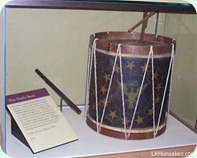
"War is an ugly thing, but not the ugliest of things. The decayed and degraded state of moral and patriotic feeling which thinks that nothing is worth war is much worse. The person who has nothing for which he is willing to fight, nothing which is more important than his own personal safety, is a miserable creature and has no chance of being free unless made and kept so by the exertions of men better than himself."
John Stuart Mill

THANK YOU to all Veterans
past, present, and future.

Thursday, November 10, 2011
Travel with Sarah Todd to Turkey!
Today, Sarah shares with us her visit to Cappadochia.
~~ ~~
First time visitors to Cappadochia in Turkey could easily be forgiven for believing they’ve landed on a distant planet in a galaxy light years from earth. The reason? The unique landscape and history of this area is unique in the world.
Situated in the region of Central Anatolia, Cappadochia (pronounced “kappa-dok-key-ah”) owes its unique landscape to volcanic activity dating back between three and nine million years ago. As the lava cooled layers of volcanic basalt rocks formed over the natural soil. Gradually the harder volcanic rock began to crack, and the much of the softer earth below the basalt was eroded. However, in many places smaller boulders of basalt rock remained, protecting the soil from erosion. This resulted in the formation of a pillar of softer soil topped by a cap of basalt rock. This feature is known as a “hoodoo”, or “fairy castle".

Before my visit to Cappadochia I researched some of the history of this fascinating region. It is believed around 36 different civilisations have lived in this region. When one considers that Egypt has been home to six civilisations this gives one an idea of the vast influences each of the people residing here have left on the region. Artefacts dating back to 3,500 BC have been excavated at Cappadochia, including kitchen containers, spindles, weights and even human bones. During its long history the so-called fairy castles have provided accommodation, and even today some of these wonderful natural structures still form part of modern day houses. In 1985 Cappadochia was named as a UNESCO World Heritage Site.
I visited Cappadochia in March 2008, together with my Brisbane-based nephew and his wife. At the time I was living in Izmir, Turkey’s third largest city. Izmir is on the country’s western coast, and the flight east to Cappadochia took about two hours. To describe my command of the Turkish language as “basic” is generous, so we arranged to view the area with a tour guide. We were met at the airport by Mehmet and his driver Ergan. The drive from the airport to our hotel took under one hour, and included a stunning view of Mount Erciyes (3,932 meters above sea level) - the tallest mountain in the region and Turkey’s fourth highest mountain.

Our first stop was the Katpaktuka Cave Hotel in Goreme, one of the small towns in the Cappadochia area. The exclusive hotel comprises eight rooms, all built around actual fairy chimney rooms. Windows and doors fitted to each room have been designed and fitted without causing damage to the actual fairy chimney. Each room is furnished and decorated with items from the nomadic and Ottoman eras. The hotel is positioned to take full advantage of sunrise, which when viewed over this unique landscape is stunning. On the left is the view from my bedroom window, while the picture on the right is of the passage outside my room.


Our first stop was a place that is almost a national park just outside Goreme. Here the fairy chimneys are in excellent condition, and there are plenty of marvellous photographic opportunities. Interspersed with the windows and doorways are many much tinier holes, providing homes to pigeons – the ancient people used their guano for fertiliser and as an adhesive. Houses in ancient times were very different to the places we call home today – families lived in several rooms, with ablutions and cooking carried out in larger single rooms shared by a number of other families. Communal kitchens with blackened walls and ceilings from centuries of cooking featured tables formed from the same natural soil making up the fairy chimney structures, clearly visible in the picture below.

Stairs have been carved into the natural rock for access to rooms at different levels in the fairy chimneys, so they look almost like an ancient high-rise block of apartments. Mehmet told us the rain and wind is slowly eroding the Cappadochia fairy castles, so that one day in the distant future they will disintegrate into dust below their basalt caps. He showed us how easily the sand can be wiped off the structures simply by brushing his hand over their surface. It made me feel quite humble to realise how fortunate I am to have seen this unique place while it still exists, as well as proving why the fairy chimneys are so well protected.
It had rained the night before we arrived; so much of Cappadochia was still damp. This brought out the reds and greens of the iron and copper mineral spores in the soil, making the entire area look even more surreal.

Our drive back to Goreme took us past some wonderful scenery. We visited Cappadochia in March, which is winter in Turkey, so the leafless trees and dry grass added to the sense of visiting an alien world. Although the vegetation was sparse and dormant, this simply enhanced the natural beauty of the terrain.
After a traditional Turkish lunch of kite (minced lamb), salads and bread, washed down with a strong cup of Turkish coffee we visited a traditional Turkish carpet factory. Prized all over the world, handmade Turkish carpets feature designs unique to each region in the country. The dyes used to colour the wool supplied by local farmers are all sourced from natural products. Generations of mothers and grandmothers have passed the craft to their daughters, who spend many long hours in front of looms using intricate knots to create the carpets. Watching these women at work one can understand why a handmade Turkish carpet is so expensive.
The factory also produces silk carpets, using thread obtained from their own silkworms. These carpets are the most beautiful I have ever seen; the combination of the fine silk threads with rich jewel colours bring the carpet to life. One silk rug featured The Tree of Life, a very important part of Turkish mythology. The glorious tree shimmered in gold and emerald green, surrounded by innumerable animals, birds and plants. Combined with sapphire blue waters and ruby red roses the depth and vibrancy of the colours brought the entire carpet to life. The price tag of US$11,000 was not really surprising considering the carpet took over 2 years to produce! After our tour of the factory we were given a short lesson on working on a Turkish “Kulim” (a woven rug with no pile) on a loom. It wasn’t as easy as it looks!

The following morning we visited some of the eleven Christian Churches dating back to the 9th century. The Churches are located in an area known as the Goreme open-air museum. Each church has been built inside the fairy chimneys, and has been decorated with brightly coloured paintings featuring stories from the Bible. There is a Church of St John the Baptist, the Sandals Church (so named for the footprints painted under its Ascension painting) and the Snake Church, which owes its name to a fresco of St George and St Theodore slaying the snake.
Although the colours remain fresh and in excellent condition, some of the frescos have been damaged. The Muslim faith forbids the depiction of prophets and religious characters, so many of the faces have been cruelly mutilated – their eyes have been scratched off or the faces completely erased. Each church is unique, with its own story and history, and most of them have benches and tables that were used by the congregation.

We spent our afternoon at a pottery in Avalos. The Kizilirmak (“red”) River flowing through the town is the source of the red clay used to make the pottery for which this town is famed. Some of the techniques used by the modern day potters working here date back to the Hittites, who lived in Cappadochia around 2,000 BC. Before visiting the store selling the pottery we watched the potters at work. On their insistence we each donned huge protective trousers and took our turn behind the potter’s wheel. It was messy and great fun.
In the shop I bought a traditional Turkish plate and a clock, both featuring the Tree of Life. Again, my eye was caught by an enormous Ali Baba pot. The hand painted pot was over one metre tall, and decorated with jewelled tulips and other flowers. We were assured that the $40,000 price tag included shipping to anywhere in the world...

Our final day in Cappadochia was spent in the ancient city of Derinkuyu, one of 36 underground cities in Cappadochia. Reaching eight stories below the earth’s surface, up to 10,000 inhabitants and their animals could survive for up to six months in the city without moving above ground. Rooms for storing grain and other food products were cool enough to ensure the contents remained fresh and edible, while water was supplied by wells below the lowest level of the city. Ventilation was and is excellent – although we were only permitted to explore the first three levels of Derinkuyu the air was fresh, never damp nor stale.
The city was accessible through a secret entrance, and proved a very good defence against marauding tribes, who could also be dealt with should the city be discovered. Special round millstone doors were rolled across the entrances and wedged shut. These doors could only be opened from inside the city, and the keyhole in the centre of the stone was large enough to thrust a spear through to caution anyone trying to gain access to the underground residences. Although the passages to the rooms were fairly narrow they are very well lit, and the electric cords and cabling do not detract from the city. We saw a giant circular stone covered in small indentations – this was the equivalent of an ancient spice rack used in the kitchens.


In the evening we watched the Whirling Dervishes perform their centuries-old “dhikr”, a dance honouring man’s spiritual evolution through God. The most famous part of the dance is “twirling” or pirouetting continuously for periods lasting up to half an hour. The dervishes twirl on the right foot, dressed in white gowns to symbolise death, a black coat commemorating the grave and a brown hat to represent the tombstone. We were not allowed to take photographs, but we were introduced to one of the Dervishes after the show ended. He told us the male dancers undergo up to a year of training before they may perform in public, and that twirling for such long period of time is almost cathartic!
We returned to Izmir the following day, our minds filled with the incredible culture and history of Cappadochia. Although our tour covered the most important aspects of all Cappadochia has to offer, I personally would have like to spend a few more days exploring this incredible region. Cappadochia is truly representative of mankind’s history, and the merging of both Christian and Muslim cultures is fascinating.

~~ ~~
Sarah! Thank you for this beautiful and fascinating view of Cappadochia, Turkey! You can find more of Sarah's work in her Writing.com portfolio.
Monday, November 07, 2011
Musician Interview: Adam's Attic [Repost]
[Originally posted on my original Elucidations.us site, March 2008, then on my Elucidations blog on Nov 7, 2011]
Music Interview: Adam’s Attic

Originally from New Orleans, Adam’s Attic is making waves in their new home base of Los Angeles. In November 2006, they ranked 28th out of the top 100 power pop bands on Myspace.com. Not only have they performed shows at the Hard Rock Café and the Roxy, they sold out the House of Blues as the headlining act. With several band members having strong military roots, they have also been part of Armed Forces Entertainment, which took them across the ocean to the Mediterranean and Greenland, and have played at many functions honoring the military.
The 5 member band, which includes songwriter Joe Henry on vocals, Derek Henry on bass, keys, and vocals, Scott Boaz on drums, Joe Blanchard on lead guitar and vocals, and Frank DeSalvo on rhythm guitar, is currently gearing up for a Pacific Tour this summer. I was fortunate enough to grab a few minutes of Joe's time recently.
LK: Where did you get your band name?
Joe Henry: A lot of the songs I write deal with relationships. It could be with a girl and a guy or with a father and son... Life is all about developing relationships. I came up with "Adam" because he was the first person to have a relationship with a girl, Eve, way back in the day. I was going through a bad breakup during this time of my life so "Attic" represented all of the stuff I was trying to clear out of my head.
LK: What is the best inspiration for your work?
Joe Henry: Anything that triggers an emotion. It could be a personal situation, a dream, a conversation, a special moment... It could even be a movie that grabs me. I am not good at writing material that is slick or clever. I can only write what I know or feel. My songs are definitely small personal pieces of me.
LK: What do you like best about touring?
Joe Henry: Seeing new places and meeting new people.
LK: What do you most dislike about touring? How do you prevent burnout?
Joe Henry: Leaving family and friends behind. It is awesome to have the experience of seeing new places but it is bitter sweet because the people that I really want to share those moments with are usually not with me while we are on the road.
LK: “Autumn” was written about the military stemming from your personal military history. Is there another song in particular that has special meaning you would like to share?
Joe Henry: I have a deep personal attachment to every single song I have written. Recently, I wrote a song called "My apology." It is the most personal song I have ever written. There is definitely a special meaning behind that one.
LK: If you could perform with any band or artist (living or dead), who would it be and why?
Joe Henry: I would love to perform with The Counting Crows. Adam Duritz has had a huge influence on my writing. I have seen that band a bunch of times live and they blow me away every time. His lyrics are genius!
LK: As an indie band, how do you feel about the state of indie vs. industry music today?
Joe Henry: I really don't get too caught up in that area of music. We are who we are and we just do what we do. It is hard enough to keep ourselves on track so we don't waste time worrying about issues that we have no control of.
LK: While writing songs, which comes first: music or lyrics, and why?
Joe Henry: I usually come up with some sort of basic chord progression and melody first. Then I come up with the lyrics. Once the basic structure of the song is down, I will bring it to the rest of the band so they can add their creative parts.
LK: If you had the chance, would you change your musical style to suit an "image" a recording label has created for you and your band? Or would you stick to your own style and image even if it meant losing a contract?
Joe Henry: We don't claim to know everything about music or writing. With that being said, we take critcism very well and we are open to improving ourselves. If that means we have to change a few things to become better we will. We will not change who we are as individuals to fit a mold that someone else has created for us. our music relfects who we are and we stand behind that.
LK: How do you feel about kids idolizing their favorite musicians? Do you feel singers/songwriters have a personal responsibility of any kind regarding young kids who may be listening?
Joe Henry: I don't think that people should idolize anyone...I do know that this happens with the entertainment industry and that is just part of the package. Ultimately parents have the responsibility to mold their kids into better people. I try my best to live my life as an example but we do fall short from time to time...everyone does.
LK: Have you had interesting run-ins with fans?
Joe Henry: Nothing over the top. We are always taken back when fans take the time to get to know us. We love that.
LK: What other jobs have you had?
Joe Henry: Sales, telemarketing, IT recruiter
LK: Do you have any tips for beginning singers/bands on how to find places to play, get record deals, etc.?
Joe Henry : Yes. You have to be willing to take criticism. Get a good manager that you trust and just get out there and start playing as much as you can. Most importantly, have fun!
LK: You mentioned you have big events on the horizon. Can you share with us? What is next for Adam’s Attic?
Joe Henry: We have a new record coming out soon that we are very excited about...We are also touring Singapore and Diego Garcia this summer. More exciting news will be released shortly.
LK: Have you ever considered writing a theme song for a novel?
Joe Henry: I actually wrote a song based on a Nicholas Sparks novel called "The Notebook." That song will be on our next record and it is called "Breathe."
***
I want to thank Joe for his time and his willingness to chat with us. Check out the Adam's Attic website and watch for shows in your area!
“Growing up with fathers in the military taught us about doing the right thing, discipline, and resilience to a life that is always changing. It also made us appreciate the personal sacrifices made by all military personnel.”
Adam's Attic
Friday, November 04, 2011
Travel with Shawn Kirsten Maravel to Italy!
I’d love to welcome today’s guest travel blogger, Shawn Kirsten Maravel. Shawn is an author and a military spouse whose latest book, The Wanderer, is centered on an Iraq veteran and his life when he returns home.
As most military spouses, Shawn has done plenty of traveling! Today she’s sharing with us a glimpse of several of Italy’s northern cities.
~~ ~~
Northern Italy is passed up so often for the more widely knows city of Rome and other southern cities. But Italian culture is widespread and its beauty isn’t limited to the tourist sights that we’re most familiar with.
During my husband’s year-long deployment to Iraq he was able to come home for two weeks for what they call “RNR”…it should really be called torture. BUT, considering how much of a tease it was and how painful it was to see him leave again it was a great opportunity for us to travel. We ended up driving down to Northern Italy from our Ansbach, Germany home and spending a little less than a week there.
 Our first stop was Venice. I’m sure you’ve seen picture or heard stories about the city. Some good and some bad…well let me tell you this. Whatever you heard simply doesn’t compare. It was the MOST BEAUTIFUL city I’ve ever see. Coming from someone who has living in Europe, that’s saying a lot. The streets flow with beautiful blue water, the architecture is classic and has an old aged appeal. You feel as if you’ve been transported into another world and another time. It was impossible not to just relax and enjoy the sights, sounds, and smells of Italian culture.
Our next stop was Verona. It was a city I’d chosen to travel to on a whim. After seeing the movie Letters from  Juliet I was intrigued by the fact that this was the true city of love. Where Romeo met Juliet. There are no words for how truly spectacular the city was. The water that cut through the city was the same beautiful blue as the Mediterranean water that ran through Venice, the building matched yet somehow each one stood out, and there was so much to see. Juliet’s balcony, churches, restaurants, street markets, and much more! The food was AMAZING! We walked around all day and still didn’t see everything!
 Our next major stop was Cinque Terre. The city is on the north-western coast of Italy nestled in the cliffs that overlook the Mediterranean Sea. This city had me in a state of ecstasy. There is a trail that goes along the entire cliff line, connecting the different small towns. We walked for quite some time and still didn’t see all of it. I really didn’t want to leave, sadly our hotel was four hours away and we still had to stop by Pisa on our way home which was maybe 20-30 minutes from Cinque Terre.
Pisa was not the spectacle some make it out to be. Sad to  say. We ended up getting there late due to closed off roads for a bike race and were disappointed by the tower’s actual size. It was much smaller than we’d imagined. We did however stop for gelato. It was a very romantic place to relax, talk, and enjoy our pistachio gelato, though the four hour drive back much substantially less fun.
All in all, Italy was a fabulous experience and I hope to do it again! Once you get a taste for travel it’s hard to deprive yourself!
~~ ~~
Shawn, thank you! We also got to visit Italy while stationed in Germany, but we missed Cinque Terre and Verona. I enjoyed hearing about them and seeing your gorgeous photos! 
Interested in The Wanderer or Shawn’s other books? Find her blog here, but before you go be sure to leave a comment to say you stopped by to visit Italy with her!
~~ ~~
Coming up: trips to Idaho/Montana, North Carolina, Maine, and more!
Be sure to follow my blog so you don’t miss my guests this month. I’ll add some of my own, as well.
--